REVIEW · PHUKET
Thai Cookery Class and Market Tour in Phuket
Book on Viator →Operated by Oh-Hoo · Bookable on Viator
Thai cooking starts at the market. That’s what makes this Phuket class feel practical, not just show-and-tell, with pickup before the start time and a market-to-kitchen flow that teaches you why ingredients matter. You pick four dishes from a list of 27, then cook them in a fully equipped kitchen and eat what you make.
I especially like the pairing of a short market lesson (30–45 minutes) with a longer cooking session (about 2 hours). It’s a smart way to learn Thai flavors in context, and the class is led by a certified Thai teacher named Rosie, who’s described as kind and happy to answer questions.
One thing to plan for: transfer costs can be extra depending on where you’re staying, and the schedule can shift based on ingredient availability or unforeseen issues. Also, good weather matters.
In This Review
- Key things I’d put on your radar
- Market first: why the herbs and spices lesson matters
- Choosing 4 dishes from 27: the sweet spot for variety
- The 2-hour kitchen lesson: learning technique, not just recipes
- Your lunch (or dinner) is the finish line
- Price and logistics: what $89.24 really buys you
- Group size and vibe: better than a lecture
- Where this class fits best (and where it might not)
- Tips to make your day smoother in Phuket
- Should you book this Thai cookery class in Phuket?
- FAQ
- How long is the Thai cookery class and market tour?
- Does the tour include a market visit?
- How long is the cooking lesson?
- How many dishes will I cook?
- Can I pick from multiple dishes?
- Are ingredients included?
- Do I get recipes to take home?
- Is pickup available, and where does it start?
- What languages are offered during the class?
- Is there any extra charge for transfers?
- Is there a cancellation policy or weather requirement?
Key things I’d put on your radar
- Market tour that teaches herbs, vegetables, and spices fast, before you ever touch a pan
- Pick 4 dishes from 27 options, so you can tailor your menu without getting lost in choices
- Rosie-led instruction with English and Chinese support in the classroom
- Fully equipped kitchen plus all ingredients provided, so you can focus on technique
- Recipes take-home for everything you cook, not just a vague memory
- Small group size (max 20) keeps the class from turning into a crowd event
Market first: why the herbs and spices lesson matters
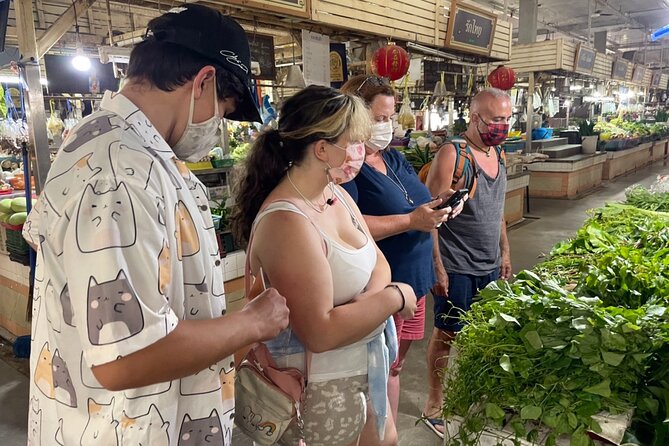
The tour starts with a transfer from your accommodation to the cooking school. Pickup typically happens 30–50 minutes before your scheduled start time, and the classroom is at Pum Thai Restaurant & Cooking School in Patong (66 Nanai Rd, Tambon Patong). When you arrive, you’re not jumping straight into chopping. You’re set up with the flavor logic behind Thai cooking.
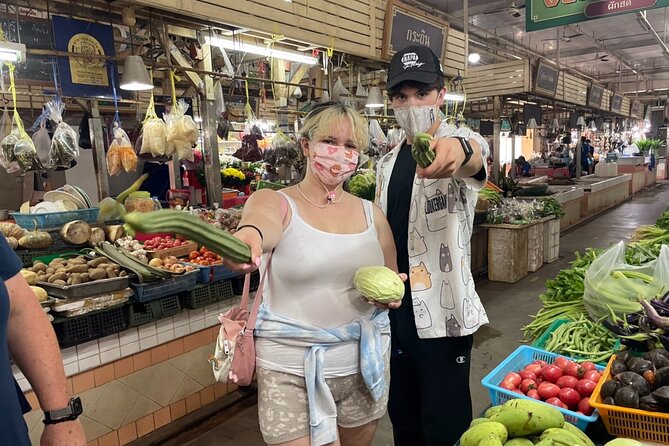
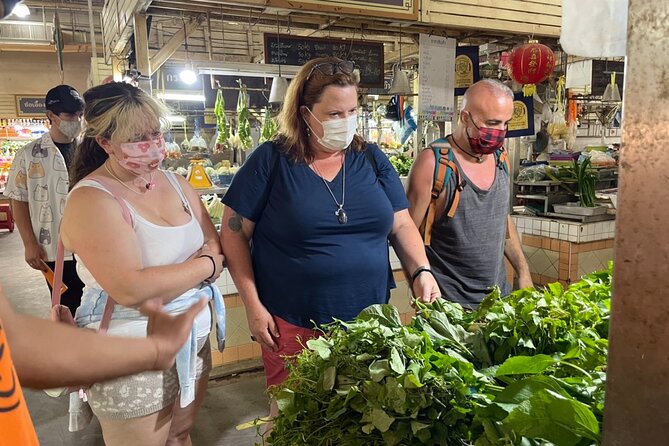
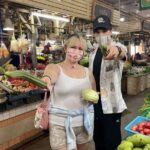
Then you head out for a 30–45 minute market tour, where you’ll learn what’s used and how to spot it. This matters because Thai food depends on specific ingredient combinations. If you’ve ever tried to recreate Thai flavors at home and felt like everything tasted slightly off, you know it’s rarely about one missing spice. It’s usually the balance, the freshness, and the right type of herbs and aromatics.
I like that this lesson is short and targeted. You’re getting practical pattern recognition: which herbs show up again and again, what kinds of vegetables are standard, and how spice choices affect the overall direction of a dish. You’ll be ready to cook because you’ve already seen the ingredients with your own eyes.
You can also read our reviews of more shopping tours in Phuket
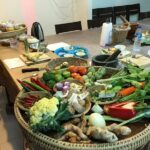
Choosing 4 dishes from 27: the sweet spot for variety
Here’s one of the smartest design choices: you don’t have to cook everything. You choose four dishes from a menu of 27 options. That gives you variety without turning the class into a marathon.
For most people, the biggest risk with cooking classes is ending up with a menu that’s either too ambitious or too safe. This setup helps because you can balance your comfort level. If you want something that feels familiar, you can pick a classic. If you’re chasing new flavors, you can still explore without committing to every dish on the list.
And because all ingredients are provided, you’re not paying hidden money later for hard-to-find items. It’s a clean way to learn the method and flavor structure of Thai cooking while still eating a meal that feels like you had a say in it.
The 2-hour kitchen lesson: learning technique, not just recipes
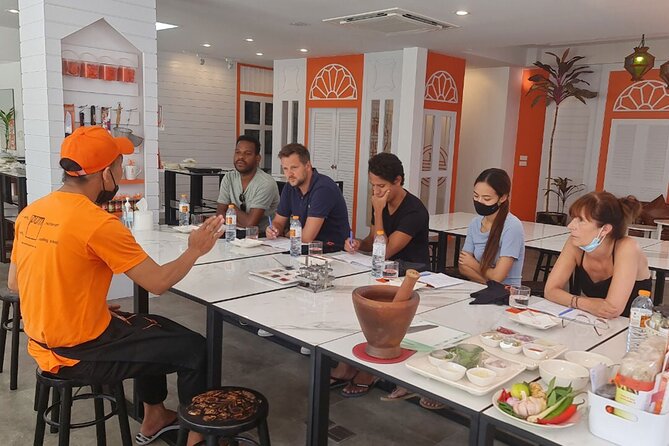
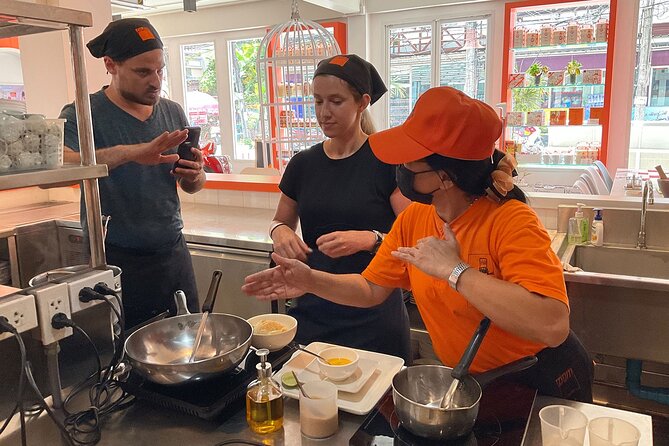
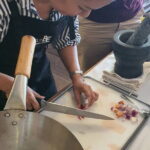
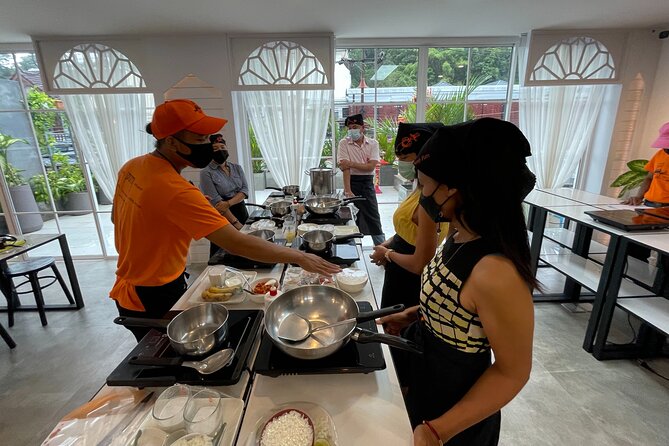
After the market stop, you’ll move into the kitchen for the main lesson, which lasts about 2 hours. The kitchen is fully equipped with what you need to cook properly, and the class is guided by a certified Thai teacher with English and Chinese instructions available.
This is where the experience earns its keep. You’ll learn how to cook delicious Thai food using authentic methods, not only following steps in a notebook. The result is that your meal isn’t just edible. It’s genuinely tied to the ingredients you saw in the market.
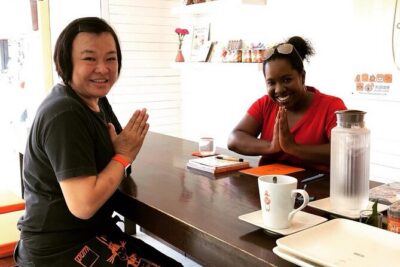
I also like that the class is set up for questions. Rosie is specifically called out for being kind and knowledgeable, with a willingness to answer questions. That matters if you’re the type who asks why something works instead of just copying a recipe.
During class, you’ll have tea, coffee, and filtered water. It’s a small detail, but it keeps the session comfortable, especially in Phuket’s heat.
Your lunch (or dinner) is the finish line
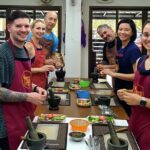
The best part of most cooking classes is eating, and this one is built around that. After cooking, you and your fellow students sit down to dine on your creations—Thai lunch or dinner depending on the timing of your session.
Eating what you cooked changes how you retain the lesson. You’re tasting in real time, not reading later and hoping it clicks. If a dish is sweet, sour, salty, or spicy in a way you didn’t expect, you’ll understand it right away because you made it.
Also, this is a “whole meal” approach. Instead of one dish demoed while you watch, you produce multiple items. That’s how you start seeing patterns in Thai cooking—how different dishes might share aromatics, or how spice levels are used for balance rather than firepower alone.
Price and logistics: what $89.24 really buys you
At $89.24 per person for about 4 hours total, this class is in the range where you should ask: what’s included, and does it save you time and money versus DIY?
Here’s what you’re getting that supports the value:
- All ingredients are provided for the dishes you choose
- A guided market tour is included (30–45 minutes)
- Recipes for everything you cook are provided so you can repeat at home
- Tea, coffee, and filtered water during the class
- A certificate of achievement
- Pickup is offered, with a defined meeting point in Patong
What can add cost:
- Round trip transfer may cost extra depending on where you’re staying. The tour lists these additional charges:
- 100 THB per person round trip for Patong, Kalim
- 200 THB per person round trip for Kata, Kamala, Karon
- 300 THB per person round trip for Phuket Town
- 500 THB per person round trip for Rawai, Surin, Bang Tao
- 1,600 THB per person round trip for the Airport
- There can be schedule changes if ingredients are unavailable or due to unforeseen circumstances, and the activity requires good weather.
So what does that mean for your decision? If you’re staying close to Patong, your “extra transfer” might be low or manageable. If you’re farther out, double-check the transfer fee so the final price doesn’t surprise you. Still, even with extras, the included ingredients + recipes + market instruction can make this one of the more cost-effective “activity + meal” choices in Phuket.
You can also read our reviews of more tours and experiences in Phuket

Group size and vibe: better than a lecture
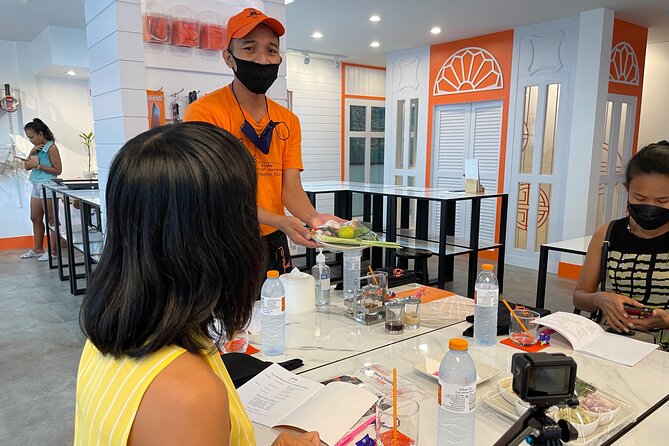
This class caps at 20 travelers. That’s a sweet spot. Big enough that the energy stays lively, small enough that you’re not shouting questions to the back row.
You’ll also get both English and Chinese instructions, which is useful if you’re comfortable learning through demonstration but want clarity on wording and technique. A cooking class is way easier when you understand what you’re doing and why, not just what step comes next.
The vibe here is hands-on. One of the strongest signals from the feedback is that people found the activity engaging and practical. You don’t want a class where you stand still and watch someone else cook. The market-to-kitchen structure is designed to keep you involved from start to finish.
Where this class fits best (and where it might not)
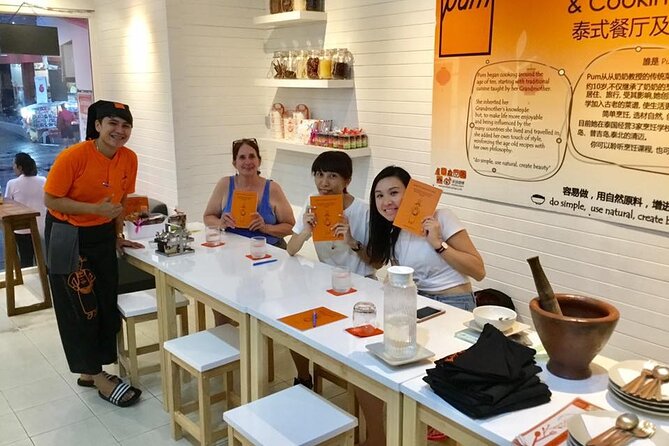
I’d recommend this experience if:
- You want a hands-on Thai cooking lesson with real ingredient context
- You’d like a take-home result (recipes for everything you cook)
- You’re okay with group learning and prefer a structured flow
- You want an activity that ends with a meal you helped make
I might skip it if:
- You’re hoping for a long, deep cultural food tour. This is practical cooking, with a shorter market segment.
- You’re very schedule-sensitive. Pickup happens before your start time, and the plan can shift due to ingredients or unforeseen circumstances.
- You’re traveling during a period where weather is uncertain. The tour requires good weather.
Tips to make your day smoother in Phuket
A cooking class succeeds or fails based on small choices you make before you arrive. Here are a few that fit this exact style of tour.
- Wear shoes you can move in. You’ll likely walk through a market area before cooking.
- If you’re picky about spice, tell the teacher during the class. Thai spice can be nuanced, and picking four dishes means you can aim for your comfort level.
- Treat the market lesson like prep work. If you pay attention to herbs and spice types, the cooking steps feel faster and less confusing later.
- Bring your curiosity. Rosie is known for answering questions, so ask what matters to you—substitutions, flavor balance, or technique.
Should you book this Thai cookery class in Phuket?
I’d book it if you want a solid “market + cooking + meal” experience that’s structured, not chaotic, and you plan to cook again at home. The best parts are built in: market context, four dishes you choose, a kitchen session that’s long enough to matter, and recipes you can actually use after the trip.
Before you hit confirm, check your location against the listed extra transfer charges. Also, keep an eye on the weather. If those two things work for you, this is a strong value for $89.24—especially because it delivers both learning and lunch/dinner without you hunting ingredients on your own.
FAQ
How long is the Thai cookery class and market tour?
It runs for about 4 hours (approximately).
Does the tour include a market visit?
Yes. You’ll have a guided market tour for about 30–45 minutes.
How long is the cooking lesson?
The cooking lesson is about 2 hours.
How many dishes will I cook?
You’ll choose and cook four dishes.
Can I pick from multiple dishes?
Yes. You choose from a list of 27 available options.
Are ingredients included?
Yes. All ingredients are provided.
Do I get recipes to take home?
Yes. You’ll receive recipes of all dishes learned.
Is pickup available, and where does it start?
Pickup is offered. The activity is tied to Pum Thai Restaurant & Cooking School – Patong at 66 Nanai Rd, Tambon Patong, and the activity ends back at the meeting point.
What languages are offered during the class?
English and Chinese instructions are available.
Is there any extra charge for transfers?
There can be extra transfer charges depending on where you’re staying, listed per person round trip (for example, 200 THB for Kata/Kamala/Karon and 300 THB for Phuket Town).
Is there a cancellation policy or weather requirement?
The experience is weather-dependent and requires good weather. You can cancel for a full refund up to 24 hours before the experience start time.