REVIEW · PHUKET
Blue Elephant Thai Cooking Class with Market Tour in Phuket
Book on Viator →Operated by Oh-Hoo · Bookable on Viator
A morning market plus a hands-on Thai cooking class sounds like a full day, but this one is neatly packed into about 4 hours. You’ll start with a local market tour in Phuket Town, then return for theory, a step-by-step demo, and time at your own station to cook four Thai dishes you can actually eat for lunch.
I especially like the way this class is set up for learning: you get recipe booklets and take-home methods, not just vague tips. And the small group size (up to 20) makes it feel more like a real cooking lesson than a show. One catch: there’s no hotel pickup, so you’ll need to get yourself to Krabi Road (Governor’s Mansion area) on time.
In This Review
- Key highlights you’ll care about
- A morning market that teaches you what you’ll cook later
- The Blue Elephant classroom: theory first, then your hands do the work
- Practice room reality: you get your own space and wok
- Your four dishes aren’t just practice—they’re your lunch
- Where the value really comes from (not just the price tag)
- Logistics that affect your experience (small details, big impact)
- Who this class fits best
- Should you book Blue Elephant’s Phuket cooking class?
- FAQ
- What time does the Blue Elephant Thai cooking class start?
- Where is the meeting point?
- How long is the experience?
- Do I need to arrange hotel pickup?
- What happens first: the market or the cooking?
- How many dishes will I cook?
- Is lunch included?
- What is included in the price?
- Is the group size large or small?
- What if weather is bad?
- Can the schedule change?
Key highlights you’ll care about
- Phuket market tour first: you’ll see ingredients like Thai fruits, vegetables, and colorful spices before cooking starts
- Four-course cooking in one session: theory, demonstration, then practice using your own wok and space
- Take-home recipe cards: you won’t have to scribble notes just to remember what you made
- Hands-on help at the practice room: instructors work with you while you cook, not after you finish
- Blue Elephant keepsakes: apron, shopping bag, certificate, and a booklet with the day’s recipes
- Good attention to dietary needs: one review specifically praised an instructor’s vigilance for a gluten intolerance
A morning market that teaches you what you’ll cook later
This is one of those Phuket food experiences that makes you pay attention from the start. You meet at the Blue Elephant Phuket Cooking School & Restaurant on Krabi Road, in Phuket Town, where the day begins with refreshing Thai herbal drinks plus tea or coffee. That first stop matters because you’re about to spend the morning using your senses—smell, color, texture—not just listening.
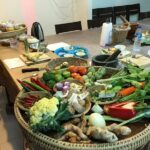
Then you head out for a local morning market with your chef-guide. This isn’t the kind of tour where you just point and move on. The focus is practical: Thai fruits and vegetables, and the way spices and ingredients show up in real dishes. You’ll learn how multi-colored spices are used and what they bring to flavor and balance.
A nice detail here is the pacing. The market tour is scheduled early enough that it still feels like an active shopping time, not an awkward “tourist hour.” And because you’re going to cook the same kinds of ingredients later, the market doesn’t feel like a separate activity—it feels like the ingredient class you actually needed.
You can also read our reviews of more shopping tours in Phuket
The Blue Elephant classroom: theory first, then your hands do the work
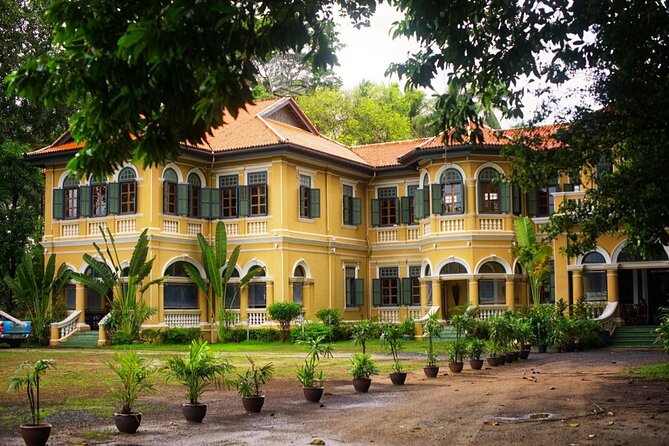
After the market, you return to the cooking school for a quick reset and a theory section. Around 10:20am, the chef explains the four-course meal you’ll prepare. That matters because Thai cooking can feel confusing if you only see the final dish. When you understand the role of key flavor components first—sour, sweet, salty, spicy, aromatic—you’ll be able to follow what you’re doing later.
Then comes the step-by-step stage (about 10:40am). The chef demonstrates each dish and explains the process. In one review, I noted the class setup made it easier to learn—there was even a mirror above the instructor’s station so students could see what was happening from their desks. That’s the sort of small, practical design choice that improves learning. If you’ve ever watched someone cook and struggled to see the pan angle or chopping technique, you’ll appreciate this.
You also receive a booklet with the day’s recipes, along with a Blue Elephant apron. The idea is simple: you’re not going to spend your lunch break trying to remember what you did. You’ll have something to recreate later.
Practice room reality: you get your own space and wok
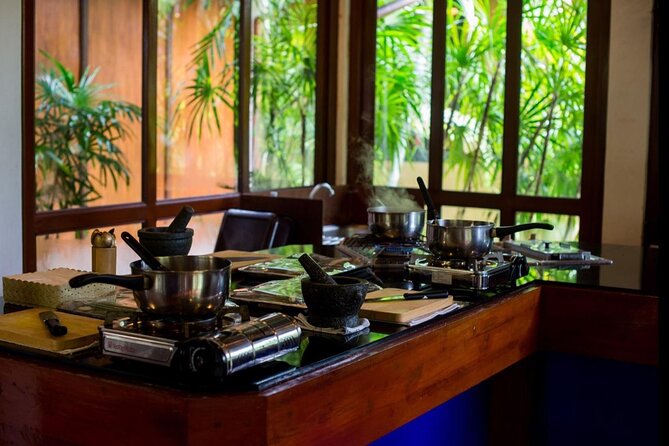
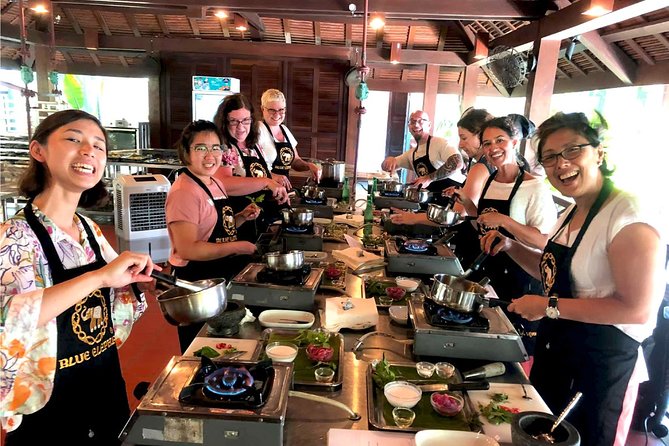
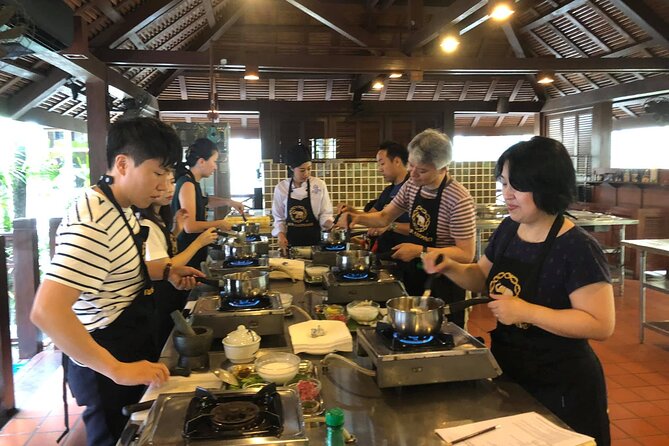
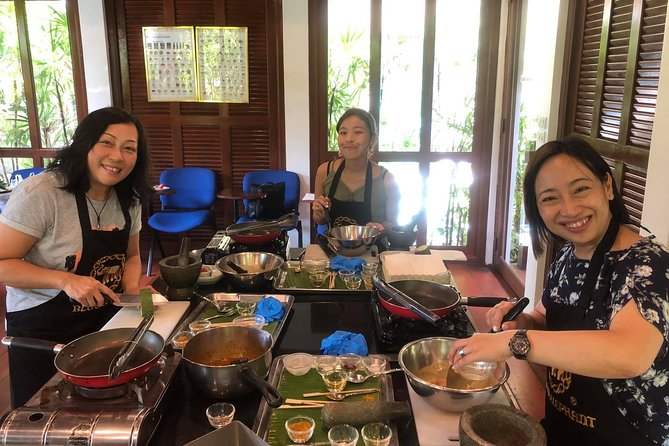
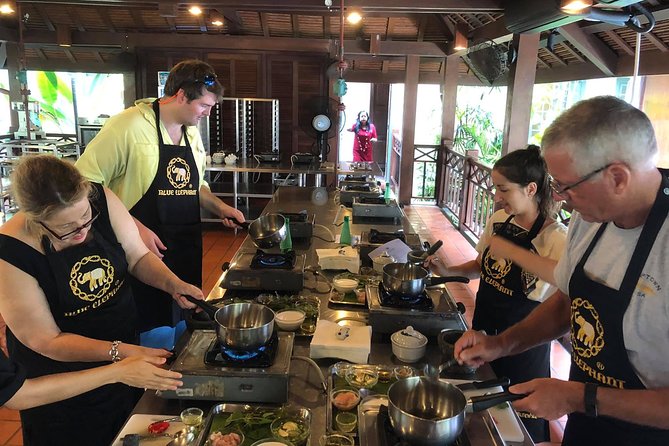
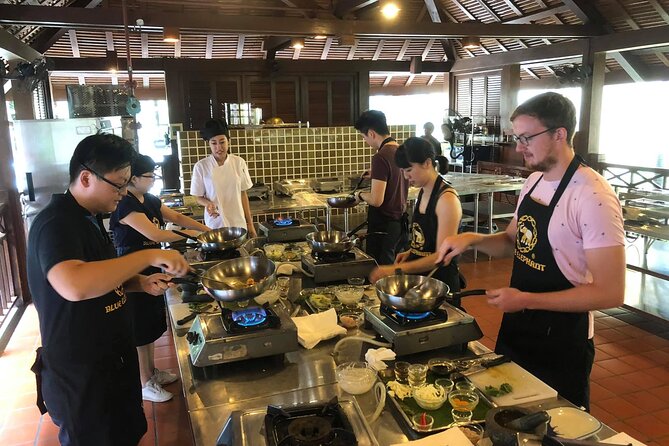
This is where the class earns its reputation as a hands-on experience. Around 11:30am, you move into the practice room and start cooking for real. The format is built for individual work: each student has their own space and wok, so you’re not hovering behind someone else or waiting for a group turn.
In the reviews, a consistent theme shows up: instructors were affable and thorough, and students found the instructions easier after demonstration. One person called out an instructor’s knowledge and quick wit, while another highlighted how the teacher pointed out the ingredients for the dishes as they cooked. That combination—clear guidance plus a relaxed vibe—usually makes a cooking class either smooth or stressful. Here, the tone sounds like the former.
Important note on dietary needs: one featured review mentioned a participant with a gluten intolerance and praised the chef’s vigilance to keep things safe. While I can’t promise how every dietary request will be handled, this at least tells you the team is paying attention when someone has real needs. If that applies to you, I’d treat it as a “say it early” situation and bring it up at the start.
Your four dishes aren’t just practice—they’re your lunch
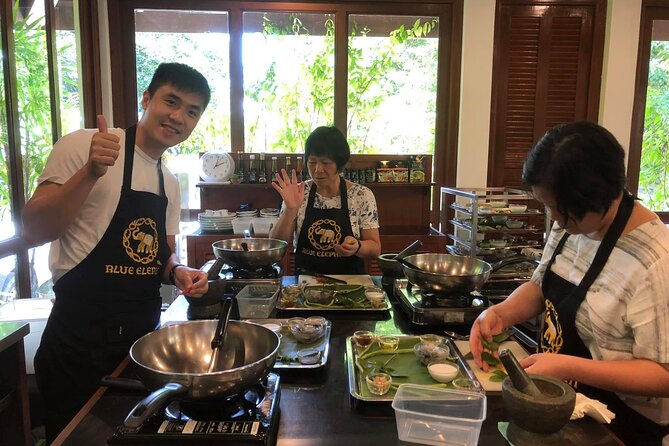
The class ends around 12:30pm, with the transfer of certificate and souvenir. Then lunch lands at about 1:15pm, in the Blue Elephant restaurant setting, where you eat what you prepared.
That pairing—cook, then eat immediately—does two useful things:
- You taste while your memory is fresh, so the flavors make sense.
- You can adjust in your head (or with the recipe booklet) if something needs tuning.
And the lunch part is a big value factor. You’re not paying for ingredients and then quietly taking food home to “try later.” You’re getting a meal out of the class structure.
Where the value really comes from (not just the price tag)
At $149.13 per person, you’re not buying a cheap half-hour activity. You’re paying for a guided market morning, chef-led instruction, ingredients, equipment time, and take-home materials. The included list also covers a lot that you’d otherwise have to spend time and money on: all ingredients, apron, shopping bag and products, refreshing towel, certificate, and recipe materials.
For Phuket, that’s often the difference between “nice food moment” and “I learned something I’ll use again.” The take-home recipes matter because you’re leaving with methods you can repeat, not just photos. And the Blue Elephant branded items add a practical bonus—if you cook at home, that apron and shopping bag are exactly the kind of stuff that gets used.
Also, with a minimum of 10 and a maximum of 20, you should expect a group that’s large enough to feel social but small enough for the chef to notice what’s happening at each station.
You can also read our reviews of more tours and experiences in Phuket


Logistics that affect your experience (small details, big impact)
No hotel pickup is included. If you’re staying outside Phuket Town or want a slow start, this can be the main friction point. You’ll want to plan transport so you’re at the meeting point well before 9:30am, since the day is timed and you’ll be moving locations quickly.
The schedule can also shift depending on ingredient availability or unforeseen circumstances, and the experience requires good weather. That’s not a reason to skip it. It’s just smart to be flexible on your Phuket schedule—keep another food plan as a backup.
You’ll also get a mobile ticket, which is convenient for day-of entry. And it’s near public transportation, which helps if you’re not trying to rely on hotel transfers.
Who this class fits best
This is ideal if you:
- love food and want something more guided than a casual street-food crawl
- want to learn Thai ingredients (especially spices and how they show up in dishes)
- enjoy cooking and like clear step-by-step instruction
- want take-home recipes you can actually follow later
It also suits solo travelers well because your station setup supports individual cooking while still keeping the day social. If you’re traveling with a partner or friends, you’ll still get your own wok time, which keeps things from turning into a one-person cooking show.
If you don’t want any cooking at all and just want to watch, you might find the hands-on portion less appealing. But if you enjoy learning by doing, this format is a strong match.
Should you book Blue Elephant’s Phuket cooking class?
I’d book it if you want a practical Thai food lesson that ends with a real meal and a stack of usable take-home recipes. The best reasons are the mix of market learning first, four dishes you cook yourself, and the fact that the class seems to run with careful instruction and real attention to students at their stations. The price also starts to make sense once you factor in ingredients, lunch, and the included materials.
Skip it only if you strongly prefer hotel pickup convenience or you’re short on time and can’t make an early start. Otherwise, this is the kind of Phuket experience that leaves you with more than memories—it leaves you with skills you can repeat at home.
FAQ
What time does the Blue Elephant Thai cooking class start?
The start time is 9:30am at the Blue Elephant Phuket Cooking School & Restaurant in Phuket Town.
Where is the meeting point?
You’ll meet at Blue Elephant Phuket Cooking School & Restaurant, Krabi Road 96, Phuket 83000, Thailand.
How long is the experience?
It runs for about 4 hours (approx.).
Do I need to arrange hotel pickup?
No. Hotel pickup and drop-off are not included, so you’ll need your own way to reach the meeting point.
What happens first: the market or the cooking?
You start with a local morning market tour, then return to the cooking school for theory, demonstration, and hands-on cooking.
How many dishes will I cook?
You will prepare a four-course meal, meaning four Thai dishes.
Is lunch included?
Lunch is part of the plan at the end of the class, when you taste and enjoy the dishes you prepared at the Blue Elephant restaurant.
What is included in the price?
Included items include all ingredients, Blue Elephant apron, market tour, certificate, Blue Elephant shopping bag, refreshing towel, and Thai herbal drinks on arrival, plus cooking recipes.
Is the group size large or small?
The tour runs with a minimum of 10 and a maximum of 20 travelers.
What if weather is bad?
The experience requires good weather. If it’s canceled due to poor weather, you’ll be offered a different date or a full refund.
Can the schedule change?
Yes. The schedule can change depending on ingredient availability or unforeseen circumstances.