REVIEW · PHUKET
Private Morning Сeremony in Wat Chalong (Chaithararam Temple)
Book on Viator →Operated by Phuket locals · Bookable on Viator
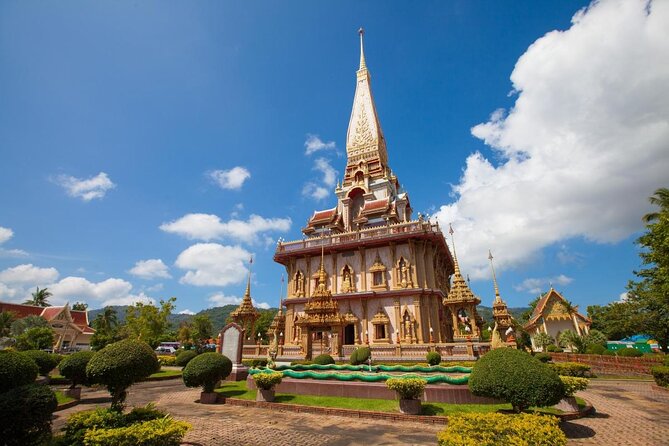
Temple silence beats Phuket traffic. This private morning ceremony at Wat Chalong turns a famous stop into something personal: you help with a monk offering, learn the logic behind Buddhist fortune telling, and start the day with a local rhythm at 7:00 am.
I love two parts in particular: the hands-on feeding the monks ritual (with the ceremony supplies provided), and the Siamsi fortune telling with sticks that locals use to ask about what comes next. One thing to keep in mind: this is a working temple morning, so it can feel busy around key prayer spots, even though the group stays small and your guide keeps it respectful and clear.
In This Review
- Key highlights you will feel right away
- Why Wat Chalong at 7:00 am feels different
- Small-group setup (private vibe with a bigger activity cap)
- Stop 1: Chaithararam Temple morning ritual at Wat Chalong
- Stop 2: Siamsi sticks fortune telling (15 minutes of real belief)
- Stop 3: Khet Aphaiyathan and a local family Buddhism walk
- What is actually included (and what it means for your comfort)
- Price and value: what $54.31 really buys
- Timing, duration, and where it fits on your Phuket day
- Respectful participation tips that make the morning smoother
- Who this is best for (and who may want a different style)
- Should you book this Wat Chalong morning ceremony?
- FAQ
- What time does the private morning ceremony start?
- How long does the experience last?
- How big is the group?
- What is included in the ceremony?
- Do I need tickets, and are they mobile?
- Is the experience suitable for most travelers?
- What should I bring for photos?
- What happens if the weather is bad?
Key highlights you will feel right away
- A small-group, early-morning start at 7:00 am at Phuket’s most famous temple
- Monk food offering with items provided, plus a guide who explains what you are doing
- Siamsi sticks fortune telling for a simple, Buddhist-style prediction moment
- Flowers, candles, incense instructions, and a sarong for traditional participation
- A live fish moment where you choose the fish type based on the blessing you want
- A short Buddhism storytelling walk around the temple with a local family perspective
Why Wat Chalong at 7:00 am feels different
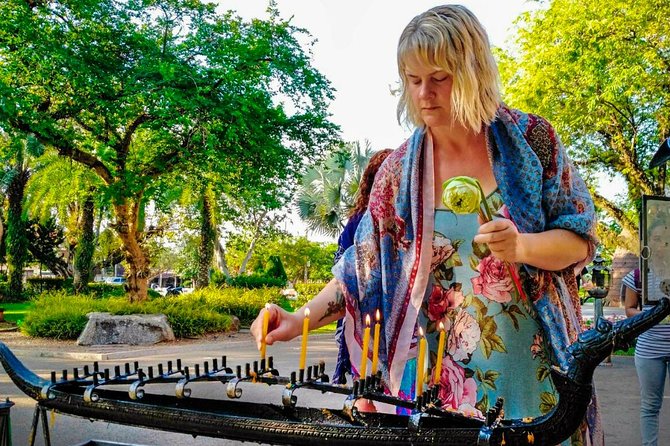
Wat Chalong is one of those Phuket landmarks that most people see mid-day, when the heat and crowds do their best to rush the moment. Starting at 7:00 am changes the energy. You arrive early, you move at a calmer pace, and you get a chance to watch the temple come alive through routine rituals.
What makes this experience especially worthwhile is that it does not treat the temple like a photo stop. It gives you roles: making lotus flowers, lighting candles and incense for different intentions, bringing food to the monks, and then participating in a belief-based fortune moment. If you enjoy understanding what you are seeing while you are still there, this format is a good fit.
Also, the whole thing is guided with a “watch, then do” approach. You are not left guessing which direction to walk, what gesture means what, or when it is your turn. That clarity matters in a sacred place.
You can also read our reviews of more private tours in Phuket

Small-group setup (private vibe with a bigger activity cap)
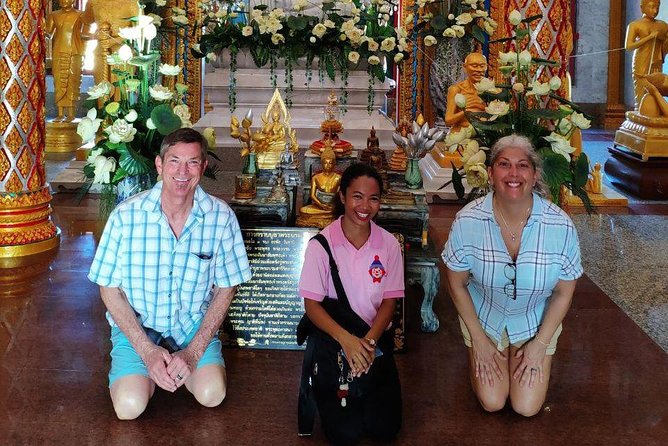
This is sold as a private group experience with a maximum of four people in your private group, so you are not stuck in a giant crowd. At the same time, the activity itself can have up to ten travelers, so the exact feel depends on how many people book for your date.
Either way, the timing and structure help. You are moving through three focused temple segments, and each one is short enough that your attention stays on the ritual rather than on logistics. Reviews also point to the guides taking time for questions, so you can ask about beliefs and temple etiquette without feeling rushed.
If you want a calm, respectful morning where you can follow instructions and actually participate, the small-group angle is one of the biggest practical advantages here.
Stop 1: Chaithararam Temple morning ritual at Wat Chalong
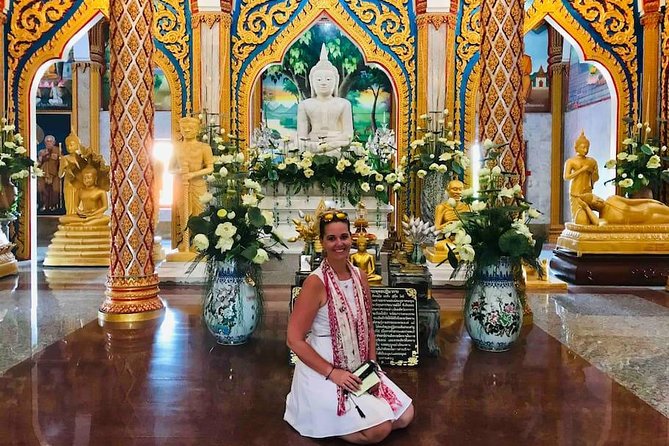
Your first stop is Chaithararam Temple (Wat Chalong), and this is the main event. After you arrive, your guide explains what is happening and then walks you through your part of the ceremony.
The core action is the monk food offering. You are not expected to bring everything yourself; the ceremony supplies are provided, including food offering items, plus flowers and candles. You will also use a sarong for traditional covered-up participation. The guide gives you the steps, so you can focus on doing the ritual correctly rather than figuring out what comes next.
Why I think this stop is the heart of the experience: feeding monks is a deeply normal part of Thai Buddhist life. It is not a dramatic spectacle meant for tourists. When you do it with guidance, you understand the respect behind it, not just the motion. It becomes less about watching and more about participating in a daily practice.
One practical note: the ceremony involves small movements—light, place, offer, and repeat. If you want great photos, you will need to balance camera time with doing the steps at the right moment.
Stop 2: Siamsi sticks fortune telling (15 minutes of real belief)
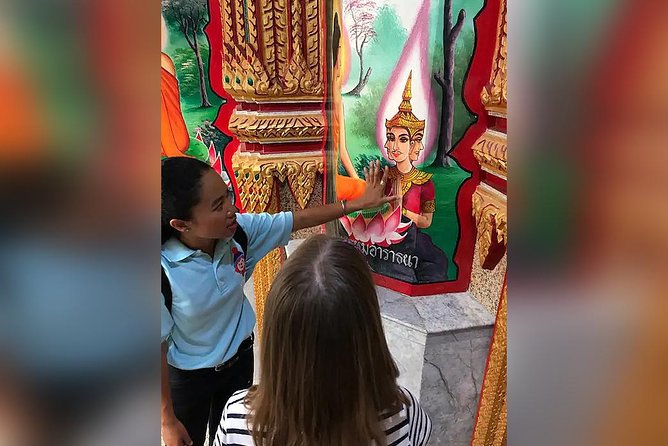
Next comes Siamsi fortune telling, done with traditional sticks at Phiphitthaphan Rup Muean Chao-athikan Wat Chalong. This part is brief—about 15 minutes—but it is memorable because it is a direct interaction with local belief.
In plain terms, Siamsi is used as a way to ask for answers about the future. Locals use it to seek guidance, and the ritual gives a structured moment to ask questions and receive a prediction. You are not just hearing a story; you are doing the ritual sequence and then listening as your guide explains what it means.
How to approach it mentally: treat it as a cultural practice, not a guarantee. You can be curious without being superstitious. What you gain is insight into how locals think about uncertainty and how they turn everyday worry into a focused question.
This stop also tends to work well for families and first-timers because it is interactive without being complicated. You can ask your guide what questions people usually ask and how the answers are interpreted.
Stop 3: Khet Aphaiyathan and a local family Buddhism walk
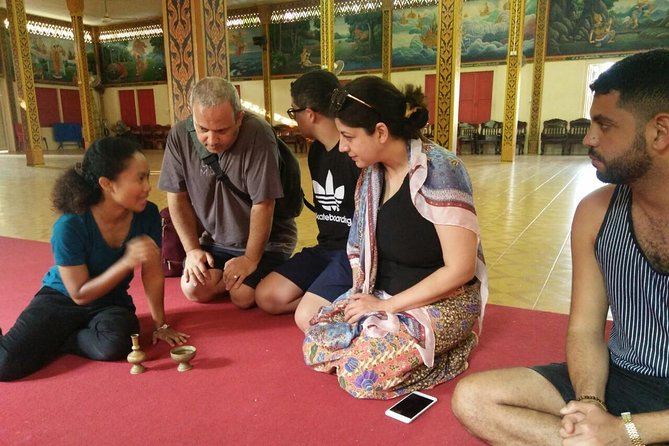
The last stop is Khet Aphaiyathan, with another short 15-minute temple walk. After the fortune moment, your guide takes you around for a small excursion focused on Thai Buddhism.
This is where you usually get the stories that make the earlier ritual feel grounded. The guide is from a traditional Thai family and shares explanations in a human way—how the practice fits into daily life, why certain offerings matter, and what different intentions commonly represent in temple culture.
The pacing is key here. Instead of turning the morning into a long lecture, the experience adds context in small doses right after you have participated. That timing helps your brain connect the meaning to the actions you already performed.
If you came to understand Buddhism beyond basic sightseeing, this final stop is a good “translation moment.”
You can also read our reviews of more tours and experiences in Phuket





What is actually included (and what it means for your comfort)
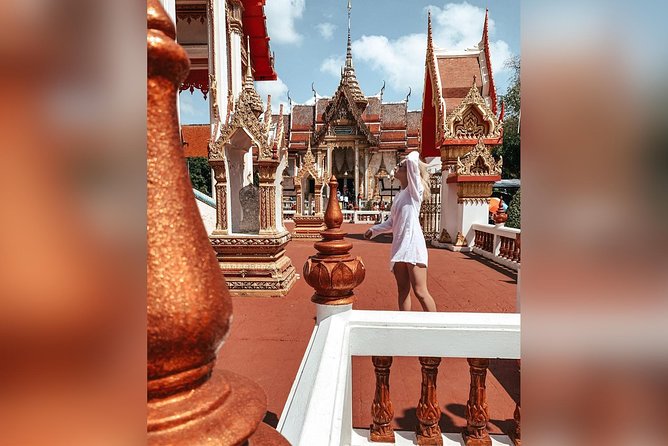
This experience includes the items that make temple participation easier—especially if you do not want to shop for supplies on your own.
Included:
- Flowers and candles for the ceremony
- Sarong (traditional covered-up clothes)
- Food offering to the monk (with food provided through the guide’s direction)
- Live fish for the final ceremony, where you choose the type of fish based on the blessing you want
That live fish detail is worth noting. It turns a symbolic ritual into a tangible choice. You get to pick the fish type depending on the blessing you are seeking, and it adds a sense of personal intention to the last part. If you are sensitive to the idea of living animals in a religious context, consider that before booking.
Not included:
- You should bring your own smartphone with a camera if you want photos.
From a comfort-and-value angle, the inclusion list matters because temples can require specific items or at least suggest them. Here, you are not left scrambling.
Price and value: what $54.31 really buys
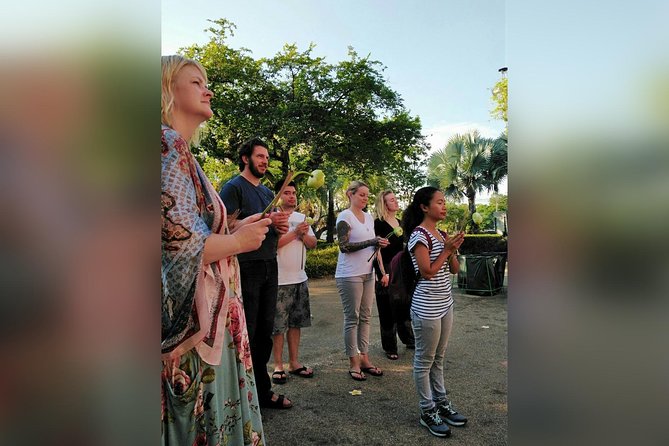
At $54.31 per person, the question is not just whether it is affordable. It is whether you get enough real participation to justify the cost.
You are paying for:
- A private-guided ritual experience (not a self-guided temple visit)
- The ceremony materials (flowers, candles, sarong)
- The monk offering support (food offering handled as part of the ceremony)
- The Siamsi fortune telling segment with explanation
- The final ceremony moment involving live fish and a guide’s direction
- A structured early-morning route that makes temple culture easier to follow
For most people, the biggest cost saver is time and clarity. You are paying to avoid the awkward part of temple visits—when you are not sure what to do, where to stand, or what you are offering. You also get a short local narrative that helps the rituals connect to meaning.
If you prefer silent sightseeing and do not care about participating in rituals, you could probably do Wat Chalong on your own. But if you want a guided morning where you take part in Buddhist practice (with supplies provided), this price starts to feel fair fast.
Timing, duration, and where it fits on your Phuket day
The total duration is about 1 hour 30 minutes. That is a sweet spot: long enough to do the main ritual and the two additional segments, short enough that you are not spending your whole morning on one temple.
Start time is 7:00 am, so you need to be ready early. This is ideal if you want to beat heat and crowds, then move on to beaches, Old Phuket areas, or food stops afterward.
One small caution: the experience is “good weather dependent.” If weather turns, the operator may offer a different date or a full refund. That is normal for outdoor temple mornings.
Respectful participation tips that make the morning smoother
This is a sacred place. The best way to enjoy it is to treat it like you were invited, not like you were visiting a show.
A few practical things that help:
- Wear/prepare to be comfortable in warm weather. You will have a sarong provided, but you will still be moving outdoors.
- Keep your phone ready, but do not let filming take over. The ritual steps happen in sequence.
- Ask questions at natural pauses. Guides can explain the meaning of what you just did. That is when it clicks.
- If you want spiritual depth, set your expectations. You will be learning and participating in a real temple process, not attending a dramatic meditation retreat.
From the way the ceremony is structured, you will likely feel most satisfied if you go with a curious mindset and let the guide pace the day.
Who this is best for (and who may want a different style)
This works especially well if you:
- Want an authentic temple experience with hands-on participation
- Prefer a small group over big bus tours
- Like understanding belief through action, not just through facts
- Are curious about Buddhist fortune practices like Siamsi sticks
It may be less ideal if you:
- Want a fully quiet, private spiritual retreat vibe with no busy temple moments
- Dislike the idea of a ritual that includes live fish as part of the blessing process
- Prefer to roam independently without structured steps
Also, if you are traveling as a family, this kind of guided participation can be easier for kids and teens than a long open-ended museum-style visit. The ceremony segments are short, and the guide’s explanations help keep attention.
Should you book this Wat Chalong morning ceremony?
Yes, if you want more than a look at Phuket’s most famous temple. This is the kind of experience that turns a famous place into something you understand: monk offering, candle-and-incense ritual participation, a Siamsi fortune moment, and a short local Buddhism walk—plus the comfort of having key items provided.
Skip it only if you truly just want to wander at your own pace, or if the live fish part gives you an uncomfortable feeling. Otherwise, this is a strong value morning because you are not just watching a ceremony—you are learning how it works by doing it.
FAQ
What time does the private morning ceremony start?
It starts at 7:00 am.
How long does the experience last?
It lasts about 1 hour 30 minutes (approx.).
How big is the group?
Your private group is maximum four people, and the activity can have a maximum of ten travelers.
What is included in the ceremony?
The experience includes flowers and candles, a sarong, food offering to the monk, and live fish for the final ceremony (you choose the fish type yourself).
Do I need tickets, and are they mobile?
You get a mobile ticket.
Is the experience suitable for most travelers?
It says most travelers can participate.
What should I bring for photos?
Bring your own smartphone with a camera if you want to take pictures.
What happens if the weather is bad?
The experience requires good weather. If it is canceled due to poor weather, you will be offered a different date or a full refund.