REVIEW · PHUKET
Open water scuba certifiication course with beach dives
Book on Viator →Operated by Kiwidiver Dive Centre · Bookable on Viator
Three days, four skills, one card. This Open Water scuba certification course is a smart mix of pre-course e-learning, pool practice, and hands-on beach training in Phuket with a small group feel. It’s also weather dependent, so the setup is practical and safety-first.
Two things I really like: the advance e-learning means you spend less time in theory when you arrive and more time getting fitted and practicing. And the instruction runs through Charles at Kiwidivers Phuket, who comes across as organized and very practiced in getting you comfortable with the tasks and safety skills.
One consideration: this course is tied to good weather. If conditions make the beach sessions difficult, you’ll need to switch dates, and you’ll also need to pass the health questionnaire and meet the age/fitness rules—no medical conditions that could affect scuba safety.
In This Review
- Key highlights I’d plan around
- Phuket Open Water Certification with Kiwidivers: the real value
- Day One: e-learning, paperwork, gear fitting, and pool training
- Day Two beach training sessions (skills 1 and 2)
- Day Three beach training sessions (skills 3 and 4) and certification
- Instructor Charles and the small-group feel (max 4)
- Marine life and what you’ll notice during training
- Price and logistics in Phuket: is it worth $503?
- Who should book this course?
- Should you book this Phuket Open Water course?
- FAQ
- FAQ
- What location is the course based in?
- What time does the course start?
- How long is the course?
- How many people are in the group?
- Is e-learning included, and when do I do it?
- What happens on day one?
- What happens on days two and three?
- When do I receive my log book and certification?
- What age can participate?
- What if the weather is bad?
Key highlights I’d plan around
- E-learning before you meet the instructor so day one is focused on paperwork, fitting, and pool practice
- Four beach training sessions across days 2 and 3 (skills 1 through 4) toward your Open Water certification
- Small group size (max 4) for more attention and calmer learning
- Charles leads with clear safety explanations and real-life scenarios while keeping you confident in the water
- You leave with a log book and certification after successful completion
- Weather-first scheduling with a reroute to another date or a full refund if canceled
Phuket Open Water Certification with Kiwidivers: the real value
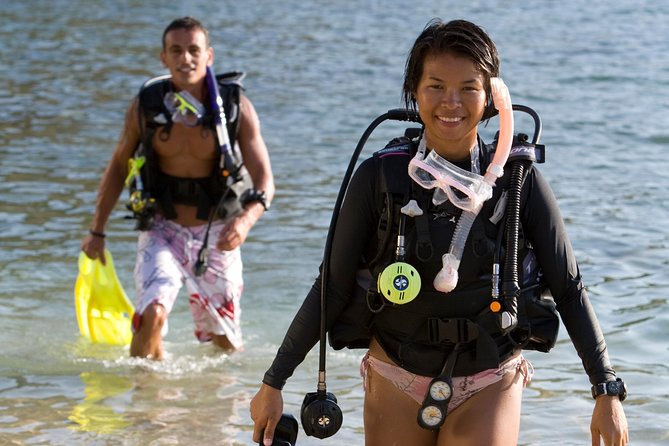
An Open Water scuba certification course is basically a structured bridge between wanting to try scuba and actually being able to do it safely on your own. In Phuket, that structure matters even more because the water can change day to day, and you want a plan that keeps teaching consistent.
This course uses a step-by-step format: you’ll complete learning online ahead of time, then you’ll polish the details with an instructor, get fitted with gear, practice in a pool, and finally do four beach-based training sessions. The payoff is that you’re not just “doing ocean time.” You’re building a repeatable skill set, then proving you can handle it.
The big bonus for your trip planning is that the training is spread across three days, starting at 9:00 am from Kiwidivers Phuket (20 Soi Lam Sai, Tambon Karon, Amphoe Mueang Phuket, 83100). That’s long enough to get comfortable and finish strong, but not so long that it turns into a whole week away from Phuket beaches and food.
If you’re the kind of person who likes clear rules, checklists, and learning in order, this course fits well. And if you’re anxious about getting it wrong, the best sign here is how the instruction is described: detailed, safety-focused, and designed to make you feel confident while you learn the why behind the skills.
You can also read our reviews of more scuba diving tours in Phuket
Day One: e-learning, paperwork, gear fitting, and pool training
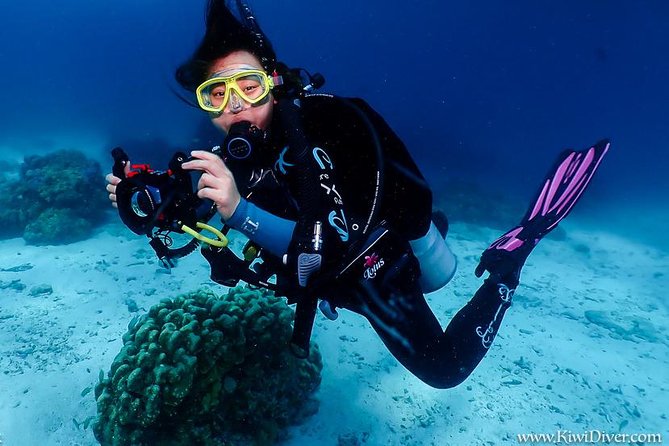
Day one is set up to remove surprises. Before you arrive, you’ll complete e-learning in advance for the educational part of the course. That means your first morning isn’t a lecture marathon. It’s more like: confirm the basics, tighten up the parts you need to reinforce, and start practicing.
When you meet the instructor on day one, you’ll:
- review paperwork
- discuss the training material that needs reinforcement
- get fitted for scuba equipment
- do pool training
That order is smart. Paperwork first keeps things legal and safe. Then the fitting matters because good equipment fit affects comfort and control. And then pool training lets you learn the motions without the extra pressure of open water conditions.
A practical tip for you: treat pool time like the foundation. If something feels awkward in the pool, it’s the easiest place to fix it with the instructor right there. You’ll likely feel better knowing that you practiced the fundamentals before the course moves to the beach.
Charles at Kiwidivers is repeatedly described as professional and organized, and that’s important on day one. New scuba students tend to have the same concerns: will they explain things clearly, will safety rules be enforced, and will I feel rushed. The way the training is described suggests you won’t be left flailing.
Day Two beach training sessions (skills 1 and 2)
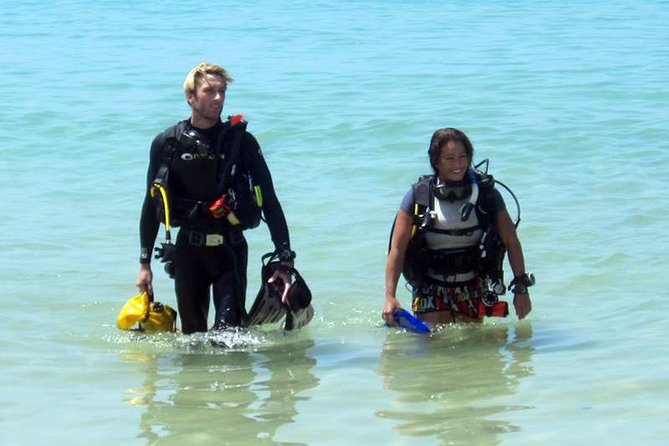
On day two, you meet at the beach for your first two training sessions. This is where the course starts turning theory and pool practice into real-world control—buoyancy, breathing, awareness, and the mechanics of staying calm while you do the required skills.
Even though you’re training at the beach (not traveling far), you’re still in open-water conditions. That means:
- you’ll feel motion and natural water variation
- you’ll need to follow the safety procedures you practiced
- you’ll have to communicate and manage yourself while doing skills
The reason this matters is that Open Water certification is about competence, not luck. You’re building the ability to handle the skills when the environment isn’t perfectly controlled.
A good thing to note for your Phuket trip: day two is not the time to cram in a late night before your 9:00 am start. The course is full-day paced, and you’ll do better if your body is rested and your head is clear.
Also, there’s a rule you should take seriously: diving within 24 hours of flying is not recommended. If you’re arriving from another country or returning to fly soon, plan your schedule so this course is not squeezed into jetlag chaos.
Day Three beach training sessions (skills 3 and 4) and certification
Day three continues at the beach for your final training sessions (skills 3 and 4). This is the “prove it” day. By now, you’ve done the basics in the pool and you’ve already had your first run of open-water training.
In a well-structured course, day three feels less like learning from scratch and more like getting consistent. You’ll likely spend time repeating and refining, with the instructor guiding you through what to do and—just as important—how to think about it so you can respond if something feels off.
After you successfully complete the required training, you receive:
- your log book
- your Open Water scuba certification
That’s a key value point for you. Many short try-scuba experiences are great fun, but they don’t give you the actual certification paperwork and training sign-off you need to progress. Here, the end goal is clearly the certificate and the documentation you’ll want later for future trips.
If you’re a parent or guardian reading this, there’s another practical detail: the course is available to people over 10 years old, and any child under 18 must have a parent supervising who must join the scuba activity. So this isn’t a drop-off experience.
Instructor Charles and the small-group feel (max 4)
The quality of an Open Water course comes down to more than curriculum. It comes down to how the instructor manages confidence. In the feedback from people who did the course, Charles is mentioned as the instructor at Kiwidivers, and he’s described as experienced, organized, and calm under pressure.
Charles is also described as an ex-serviceman from the UK and an instructor since 2000. That matters because safety training needs authority and patience, not just enthusiasm.
In my view, the best part for you is that the course is capped at a maximum of 4 travelers. Small groups help in a few ways:
- you’re less likely to feel like a number
- the instructor can catch small issues early
- practice feels slower and more controlled, even when it’s intense
And you’ll feel the difference most on day one and day two—when you’re still learning how your body behaves underwater and getting used to equipment.
If you’re worried about speaking up, this setup generally makes it easier to ask questions without feeling disruptive. You want that, especially during safety skills.




Marine life and what you’ll notice during training
This course is built around skills, but that doesn’t mean you don’t get the fun side. In Phuket, you’re in a place where marine life is one of the main reasons people sign up for scuba.
What you can realistically expect from training sessions like these is a mix of:
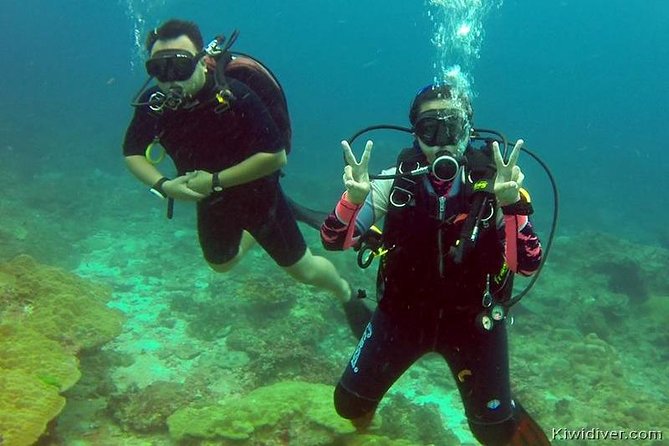
- brief moments of seeing fish and coral-adjacent life while you practice
- time focused on breathing, buoyancy, and control
- the sense that you’re learning a new way to move through the water
One thing that comes through clearly is that people associate the course with seeing plenty of marine life while still being trained properly. In other words, this isn’t just classroom time plus one short ocean moment.
For your mindset: don’t judge the whole Phuket diving/sea experience based on what you see in training. Use training as your ticket into bigger future outings. Then, once you’re certified, you’ll be able to go where you want with more confidence.
Price and logistics in Phuket: is it worth $503?
At $503 for about 3 days, this is priced like a serious certification course, not a quick novelty experience. The value comes from what’s included in the time and training structure:
- e-learning completed in advance
- instructor-led paperwork review
- equipment fitting
- pool training
- four beach training sessions (skills 1–4)
- log book and certification on completion
What makes it feel fair is that you’re paying for guided skill development and safety assurance, not just ocean access. The small group size also supports the value: you’re more likely to get the attention you need to progress.
There are two practical factors that can affect your experience even if everything is scheduled well:
- Good weather is required. If it’s canceled due to poor weather, you’ll be offered a different date or a full refund.
- You need to qualify medically. You’ll complete a health questionnaire, and some conditions like asthma or heart conditions may prevent you from participating. If you’re unsure, ask your doctor rather than guessing.
Cancellation is also straightforward: free cancellation is available up to 24 hours before the experience start time. Confirmation comes within 48 hours of booking, subject to availability, so it’s smart to avoid booking flights that lock you in tightly.
Also, the tour provides a mobile ticket, which is convenient when you’re juggling Phuket plans and transit.
Who should book this course?
This Open Water scuba certification course is a good match if you:
- want a clear, step-by-step pathway to real certification
- like structured learning: e-learning first, then pool skills, then beach training sessions
- prefer a small group (max 4) and an instructor who explains safety clearly
- are comfortable being in water for training and have a reasonable fitness level
It may not be the best fit if:
- you have medical conditions that could affect scuba safety (check the health questionnaire rules)
- you’re flying in and out on a tight schedule that ignores the 24-hour flying recommendation
- you get easily frustrated if weather disrupts plans (weather matters here)
For families: kids over 10 can do it, but the parent must join and supervise under 18, so plan your whole group accordingly.
Should you book this Phuket Open Water course?
I’d book it if you want certification, not just a fun day in the water. The course structure—e-learning, pool practice, then four beach training sessions—is exactly what you want if you’re trying to build confidence the right way.
I’d hesitate only if your health situation is unclear or if your travel schedule is too tight for a weather change. Since beach sessions depend on conditions, you’ll want buffer time in Phuket.
If you’re ready to commit to the skills and you want an instructor-led path that ends with a real log book and certification, Kiwidivers Phuket is a solid choice.
FAQ
FAQ
What location is the course based in?
It meets at Kiwidivers Phuket, 1, 20 Soi Lam Sai, Tambon Karon, Amphoe Mueang Phuket, Chang Wat Phuket 83100, Thailand.
What time does the course start?
The start time is 9:00 am.
How long is the course?
It runs for 3 days (approximately).
How many people are in the group?
The maximum group size is 4 travelers.
Is e-learning included, and when do I do it?
Yes. The educational elements are completed in advance through e-learning before you meet the instructor.
What happens on day one?
You meet the instructor for paperwork review and to reinforce the training material, get fitted for scuba equipment, and complete pool training.
What happens on days two and three?
You meet at the beach for training sessions: day two covers sessions 1 and 2, and day three covers sessions 3 and 4.
When do I receive my log book and certification?
After you successfully complete the training on the final day.
What age can participate?
You must be over 10 years old. Children under 18 must be supervised by a parent who must join the scuba activity.
What if the weather is bad?
Good weather is required. If canceled due to poor weather, you’ll be offered a different date or a full refund.