REVIEW · PHUKET
Phuket:Beach walk with elephants, rain & care. 2.5 hours
Book on GetYourGuide →Operated by Lily Elephant Camp Phuket · Bookable on GetYourGuide
Sea-and-elephant showers sound like Phuket magic. This 2.5-hour walk with elephants at Lily Elephant Camp blends a nature trek, up-close care, and a seaside “spa” moment on a private beach.
I like that it’s set up as a coastal sanctuary (not a show), with elephants roaming free of chains and no riding. I also like the hands-on schedule: you’ll feed, brush, and get brief ocean time with the herd.
The experience also leans into education, not just interaction. You make natural vitamin/herb balls, hear elephant-care context from the team, and even do a refreshing shower moment with the elephants. If you’re picky about staying dry and unstressed by costs, there’s one thing to consider: professional photos cost extra (starting around 300 THB, with some digital sets priced much higher).
In This Review
- Key points to know before you go
- Phuket elephant ethics, with real beach time
- The 150-minute rhythm: walk, sea shower, and elephant “spa” care
- Stop 1: arriving at Lily Elephant Camp in Phuket
- Stop 2: wildlife viewing and the short jungle walk
- Stop 3: feeding and making natural supplement food
- Stop 4: the private beach bathing, brushing, and the rain shower
- Stop 5: showering, brushing, and “friendship time”
- Guides, communication, and how the day feels in real life
- Facilities and comfort: coffee, clean showers, and what you’ll need
- Price and value: what you get for about $59
- Is it ethical? What Lily Elephant Camp emphasizes
- Who should book this elephant beach walk
- Final verdict: should you book Lily Elephant Camp
- FAQ
- How long is the Phuket beach walk with elephants?
- Where does pickup and drop-off happen?
- What if I book Program Only and need a shuttle?
- What activities are included during the experience?
- Is there an English-speaking guide?
- What should I bring for the day?
- Are drones allowed?
- Are professional photos included?
Key points to know before you go
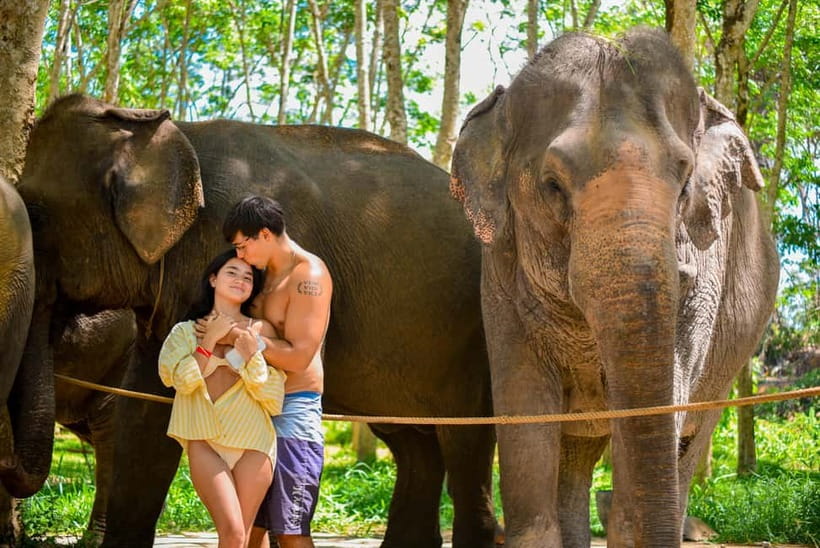
- A 15–20 minute nature walk with the elephants, then more time focused on care.
- Private beach bathing where you also brush and shower the elephants in the sea.
- Herb/vitamin ball prep so you understand what you’re feeding, not just handing over food.
- A rain-shower style moment that’s part of the bathing flow.
- Small-feeling time with elephants, even when other visitors are present.
- On-site photo services are optional, but can be pricey if you want the full set.
Phuket elephant ethics, with real beach time
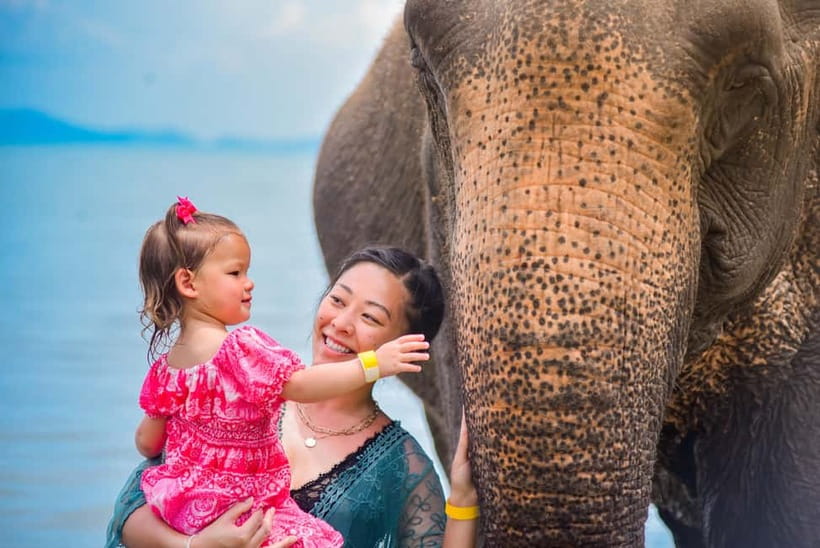
Most Phuket “elephant experiences” are either too short to feel personal or too performance-heavy to feel good. Lily Elephant Camp is different because the core moments happen in a natural, coastal setting: walking in the area, then switching to sea bathing and brushing at their private beachfront. It’s the kind of outing where you don’t just point a phone at animals. You learn how people care for them.
You’ll also get a big dose of context. The camp positions itself as a conservation and education sanctuary, and it clearly talks about elephant welfare in Thailand—especially why certain kinds of entertainment are harmful. On some tours, your guide may be Kim, who gets praised for being funny, helpful, and good at explaining what’s going on around you.
The big “wait, this is really allowed?” part is the sea bathing. You’ll spend time close enough to feel the water, smell the salt, and see how relaxed the elephants can be when caretakers manage everything carefully.
You can also read our reviews of more walking tours in Phuket



The 150-minute rhythm: walk, sea shower, and elephant “spa” care
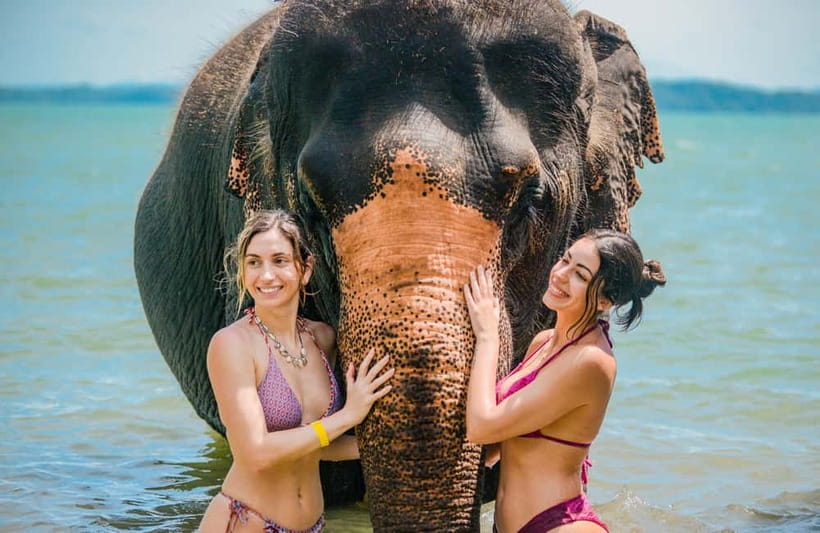
This is a fairly tight schedule—about 150 minutes—and it moves in a logical order. You start with meeting the camp area and getting briefed, then you shift into elephant-focused time that keeps changing from activity to activity. That matters because elephants react to people, noise, and pacing. A changing plan helps keep the day calm.
A typical flow looks like this:
- Jungle/nature time with the elephants (short walk)
- Feeding and brushing moments
- Sea bathing at the private beach
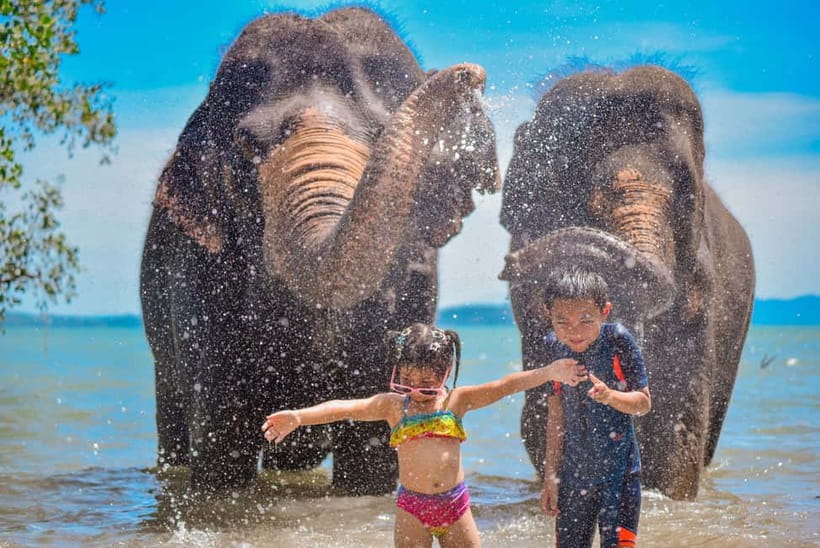
- A shower-style rinse with the elephants (and you)
- Making natural elephant supplement food (vitamin/herb balls)
- Wrap-up and departing the sanctuary area
You should expect water time to be real water time. Bring swimwear and a change of clothes, and plan to be wet at least at some point.
Stop 1: arriving at Lily Elephant Camp in Phuket
Your day usually starts with pickup if you selected a transport option during booking, with drop-offs around the main Phuket areas like Patong, Karon, Kata, and others. If you’re booking “program only,” you’ll arrange your own way to the camp. The practical win here is simple: you can choose convenience or cost savings depending on where you’re staying.
Once you’re at the camp, you’ll be oriented by the team. The camp operates as a sanctuary environment in Yamu, Paklok, Phuket, after relocating from Siray Island. It’s described as Phuket’s first coastal elephant sanctuary, and the setting is framed as a 20-acre natural habitat for both elephants and caretakers.
You’ll also get an explanation about how mahouts and caretakers support the elephants’ daily life. Even if you’ve done elephant tours before, this briefing is one of the key reasons this outing can feel more meaningful than a quick “feed and go” stop.
Stop 2: wildlife viewing and the short jungle walk
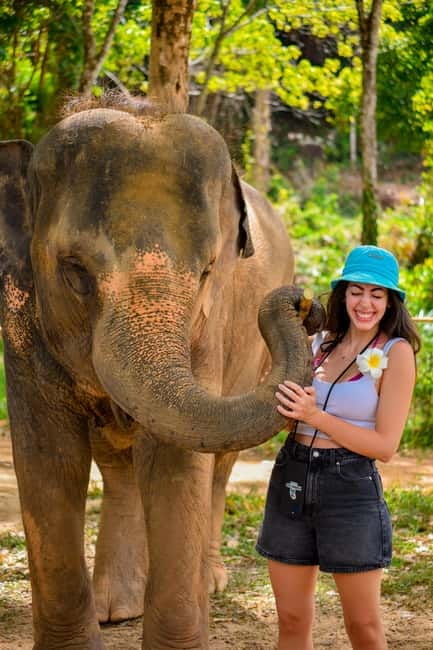
The centerpiece early on is a walk with the elephants in nature for about 15–20 minutes. This is where you get the “oh wow” feeling of watching elephants move like animals, not props. You’re not climbing on anything. You’re walking alongside them while the team keeps the pace and space safe.
What I like about this segment for you: it’s short enough that it doesn’t drag in the heat, but long enough that you notice elephant behavior—how they interact, how caretakers position you, and how everyone adjusts to the herd’s mood. You’re also not trapped in one selfie spot.
A possible drawback: depending on how busy the day is, you may share the area with other visitors. One review described roughly 40 visitors around five elephants, yet still noted that there was enough time for interactions and pictures. That’s a good sign that the camp manages turn-taking, but it still means you should be patient and ready for a shared experience rather than private one-on-one time.
Stop 3: feeding and making natural supplement food
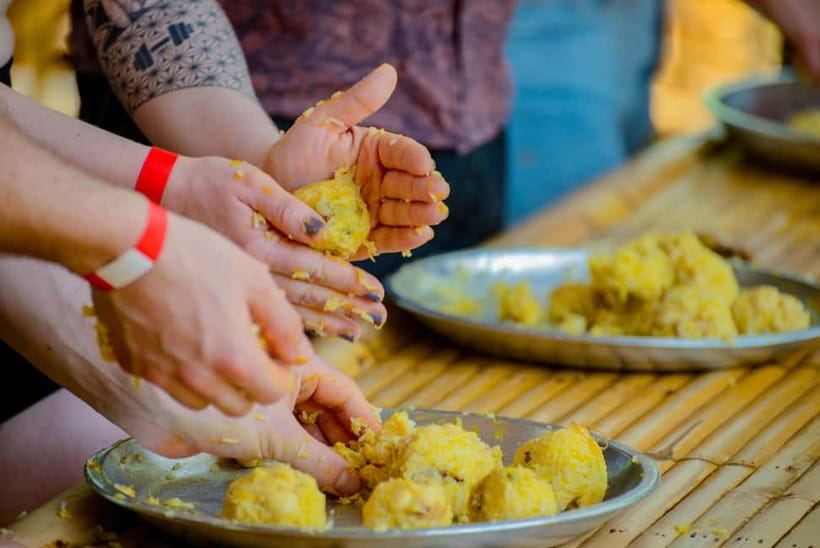
A big part of this experience is what you do with your hands, not just where you stand. You’ll feed the elephants and prepare natural vitamin/herb balls—designed as a supplement. This is one of the most valuable parts because it turns feeding from “here’s food” into “here’s a reason for the food.”
You’ll get elephant-food guidance from the camp team. If you have allergies or medical conditions, you should flag it in your booking notes so the team can plan safely around anything food- or water-related.
You might also meet specific elephants with names you’ll hear during the briefing. One visitor mentioned elephants named Lady, Happy, and Lucky. Even if you don’t get those exact names, you’ll likely learn who’s who in the herd that day.




Stop 4: the private beach bathing, brushing, and the rain shower
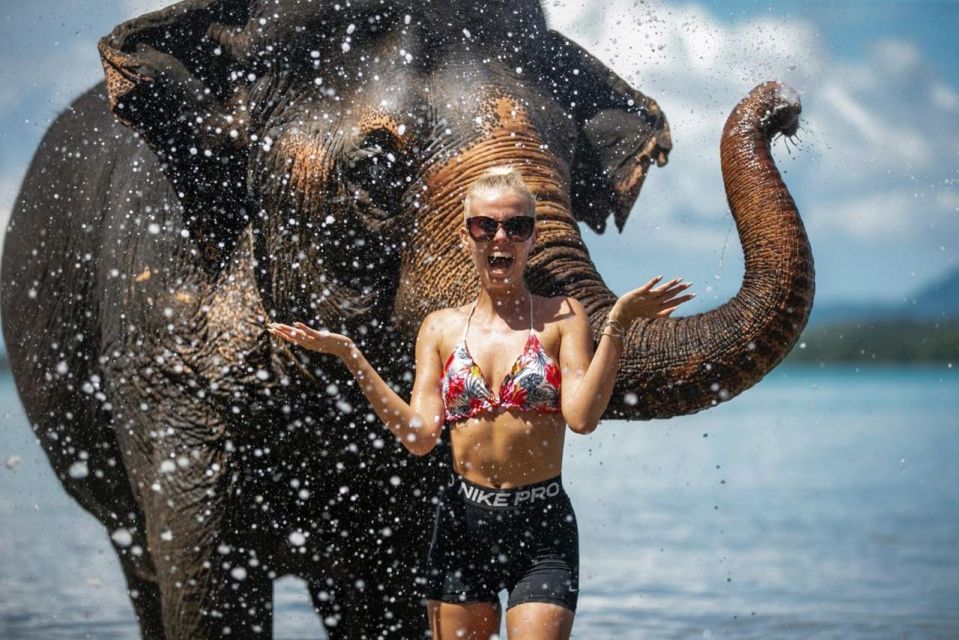
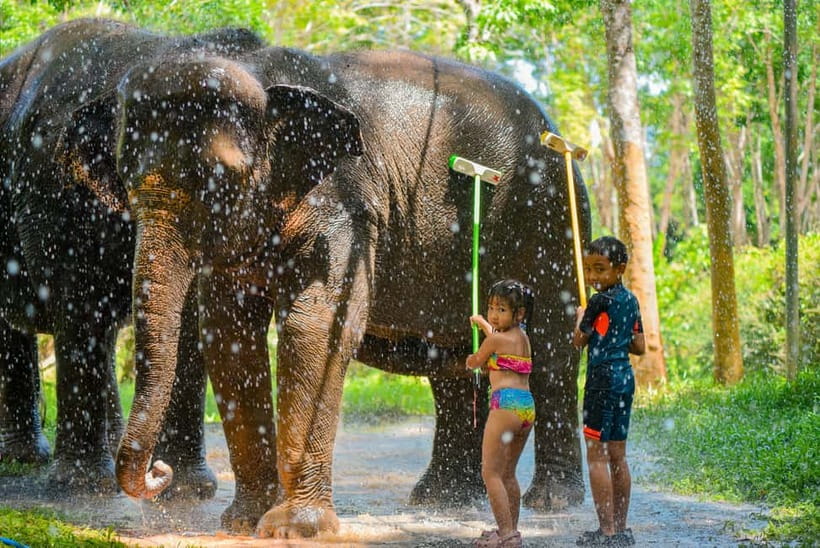
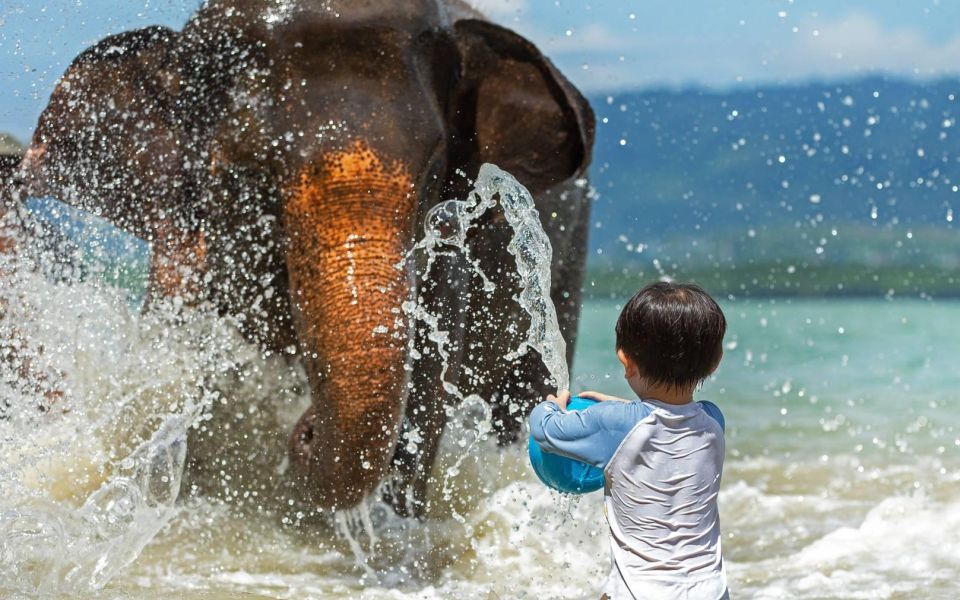
This is the part most people remember months later. You go to the camp’s private beachfront for brushing and sea bathing. You’ll also shower the elephants and (per the experience flow) participate in bathing yourself as part of the water reset.
The camp’s approach here is about care, not performance. The elephants are treated like gentle, living neighbors in a sanctuary setting, and the water time is managed as part of their routine. When the elephants are calm and the handlers keep control of spacing, it creates a surprisingly peaceful mood.
One thing to know: the ocean is not a bathtub. Reviews include a caution where someone got cut by sharp rocks and a sea urchin while trying to follow instructions. That doesn’t mean you’ll get hurt, but it does mean you should take foot protection seriously if you’re nervous about rocky edges. If you like to play it safe, water shoes can be a smart idea (and bring extra towels because you’ll want dry things fast).
If you’re worried about getting wet in a bad way, this is not the tour for “I only want photos.” It’s the tour for “I’m happy to get splashed and have fun while learning.”
Stop 5: showering, brushing, and “friendship time”
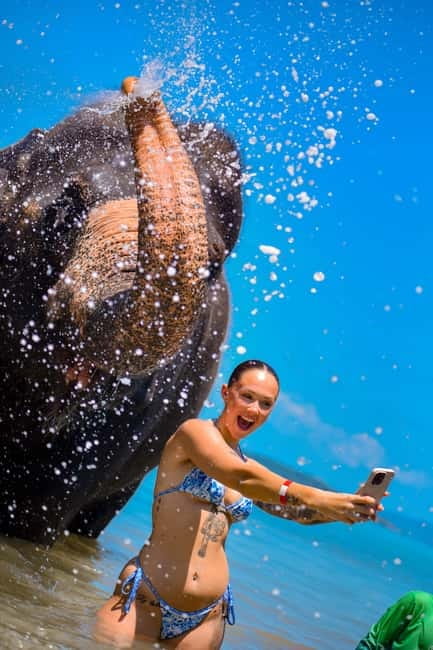
Between feeding, bathing, and supplement-prep, you get real closeness with the elephants. Many people highlight that brushing and bathing feel like a guided care activity rather than a stunt. One review described it as a kind of spa treatment moment, and the overall theme across ratings is that the elephants look relaxed.
You should also notice the difference between riding-based elephant tours and this setup. Here, the camp emphasizes freedom from chains and explicitly states elephants enjoy freedom from riding, chains, or torture. That matters because it shapes the whole day: the elephants are positioned and moved for welfare, not for human entertainment.
If you’re traveling with kids, this is one of the more family-friendly elephant encounters on Phuket because there’s no riding and no aggressive handling. It’s still active and wet, though—kids should be ready for water and following guide instructions.
Guides, communication, and how the day feels in real life
You’ll have an English-speaking tour guide (and Thai too). That helps a lot if you want the conservation talk to actually land, not just be a few random facts. One review called out a guide named Kim as especially funny and knowledgeable, and several others praised guides for being kind, attentive, and non-rushed.
One practical note: even with English availability, water activities can sometimes mean you get less back-and-forth communication during the in-ocean moment. If you’re sensitive to that, choose calm timing and listen closely before you get in. Follow instructions quickly; it’s safer and makes the experience smoother for everyone.
Facilities and comfort: coffee, clean showers, and what you’ll need
The camp is set up for guests to refresh after the water moments. Reviews mention clean showers and toilets, plus free coffee and juice on-site. That’s not just a nice bonus—it makes a wet day feel less annoying because you can reset before heading back to Phuket traffic.
Still, you should pack like it’s a beach day:
- sunglasses and sunscreen (and biodegradable sunscreen is recommended)
- sun hat
- swimwear
- change of clothes and a towel
- camera
- biodegradable insect repellent
Also, leave room in your plan for drying time and a bit of waiting while the handlers rotate activities. You don’t want to rush your photos or shove your schedule too hard afterward.
Price and value: what you get for about $59
At around $59 per person for 150 minutes, this isn’t the cheapest elephant option in Phuket. But it can be good value if you care about three things:
1) real time with elephants (walking plus bathing, not just one short feed),
2) active learning (food prep and conservation context),
3) a setting that’s clearly more conservation-minded than entertainment-based tours.
Also, it includes important basics like elephant food, an English-speaking guide, and accident insurance. If you’re choosing between a “feed-only” experience and one that includes sea bathing and supplement prep, the difference in time and interaction is where your money goes.
Two cost notes to watch:
- Transfers aren’t always included. Pickup/drop-off for Phuket City, Old Town, Kata, Karon, and Patong are included only if you picked the transport option during booking.
- Professional photos cost extra. On-site photography starts around 300 THB, and one review said 1500 THB for a digital set of 10 photos, with photos not printed. You can skip this without missing the experience, but it’s worth deciding ahead of time if you want a souvenir.
Is it ethical? What Lily Elephant Camp emphasizes
If ethics is your deciding factor, this is where Lily Elephant Camp tries to convince you with structure. The camp’s description focuses on elephants being free of chains and not used for riding or torture. It also frames the sanctuary as conservation and education, with daily involvement from mahouts and caretakers.
That still leaves one important truth: you’re visiting animals that were previously raised or used in ways we’d all rather not see. The camp addresses this reality through education and care. Some reviewers openly argue that sanctuaries can be the best option for elephants who can’t simply be released into the wild due to their past.
I’d use a simple checklist for your own peace of mind:
- Do you see handlers working with the elephants calmly, not forcing poses?
- Do you notice no riding or chain use in your experience?
- Do you feel the elephant behavior looks relaxed rather than stressed?
- Does the briefing talk about welfare and conservation instead of just selling photos?
If those boxes feel right to you, the camp’s beach walk can feel like a positive use of your time and money.
Who should book this elephant beach walk
You’ll likely love Lily Elephant Camp if:
- you want a hands-on experience (feeding, brushing, sea bathing)
- you want education mixed in, not just animal interaction
- you’re okay getting wet and following a guide-led flow
- you care about elephant welfare and want a sanctuary-style model
You might choose something else if:
- you hate water activities and want to stay dry
- you dislike shared group settings on busy days
- you’re not comfortable with the idea that professional photos cost extra
- you’re anxious about rocky shoreline conditions (you can manage this with smart footwear)
Final verdict: should you book Lily Elephant Camp
I’d book this if your priority is real contact with elephants in a care-focused sanctuary setting, especially because the private beach bathing plus the supplement prep give you more than a quick photo stop. At around $59 and 2.5 hours, you’re paying for time, education, and meaningful interaction, not just a handshake with an animal.
I would not book it if your idea of a perfect day is dry, quiet, and fully private. This is active, wet, and guided. But for the right traveler, it’s one of the most memorable Phuket animal experiences because it feels closer to caretaking than entertainment.
FAQ
How long is the Phuket beach walk with elephants?
The program runs about 150 minutes.
Where does pickup and drop-off happen?
Pickup and drop-off depend on the transport option you select. For Phuket City, Old Town, Kata, Karon, and Patong, pickup and drop-off are included only when you choose the transport option during booking.
What if I book Program Only and need a shuttle?
Shuttle fees are listed as 300 THB per person for standard transfer zones. Other locations have specific pricing, and an on-demand transportation fee of 750 THB per person may apply when booked later.
What activities are included during the experience?
You can feed and walk with the elephants, take part in a jungle walk, bathe with elephants in the sea, brush them, and prepare natural vitamin/herb supplement food. You’ll also have time with a shower/bathing flow.
Is there an English-speaking guide?
Yes. The tour includes a live guide in English (and Thai).
What should I bring for the day?
Bring sunglasses, a sun hat, swimwear, a change of clothes, a towel, a camera, sunscreen (biodegradable if possible), cash, and biodegradable insect repellent.
Are drones allowed?
No, drones are not allowed.
Are professional photos included?
No. Professional on-site photography is not included and costs extra, with rates starting at 300 THB.