REVIEW · PHUKET
3 Fun Dives King Cruiser Wreck and Koh DokMai for Certified diver
Book on Viator →Operated by Phuket Dive Provider · Bookable on Viator
Wreck at 30 meters, then caves and reefs. This Phuket day trip strings together three underwater stops, with a small-group feel and a schedule that works around weather, not wishful thinking. The highlight is the King Cruiser Wreck deep-and-dramatic setup, plus two additional sites like Shark Point and Koh Doc Mai chosen to match conditions.
I love that it stays organized without feeling rushed: you get up to 50 minutes underwater per session and small groups of three to four. I also like the comfort side of the day. Breakfast, lunch, snacks, fresh fruit, and drinks are served on the boat, and they’ll handle dietary needs (vegetarian, vegan, gluten-free, and more if you tell them).
One drawback to weigh is the depth and qualification. This is aimed at Advanced Open Water level, and the main wreck stop sits at around 30 meters, so if you’re not fully comfortable managing equalization and depth control, you’ll likely feel it during the day.
In This Review
- Key points that matter before you go
- A 3-site Phuket plan built for advanced scuba days
- Morning logistics: Chalong Pier, early start, and food on the water
- King Cruiser Wreck at around 30 meters: the main attraction
- Shark Point after the wreck: lots of marine life, usually with big energy
- Koh Doc Mai caves: serene scenery and a different kind of challenge
- Small groups and instructor attention: why the day feels controlled
- Timing and underwater time: how long you’ll really spend
- What you’re paying for: value beyond the ticket price
- Weather, weather swaps, and how cancellations are handled
- Who this suits best (and who should skip it)
- Should you book this Phuket 3-site day?
- FAQ
- What certification do I need?
- How many underwater sessions are included, and what sites are they?
- How long will I be underwater during each session?
- Are transfers from Phuket hotels included?
- What food and drinks are provided?
- What scuba gear is included?
- What happens if weather is poor?
Key points that matter before you go
- Three underwater stops in one long day (wreck, then reef, then Koh Doc Mai) so you actually get variety.
- Small groups of 3–4 per session, which usually means more attention and less waiting around.
- Up to 50 minutes underwater each stop (or until your tank hits 50 bars), so time is planned, not guesswork.
- Gear and insurance included, plus round-trip transfers from many Phuket areas, which cuts down on surprise costs.
- Instructors named in feedback like Sam, Natalie, Kob, Eak, and Max, with praise for patience and professionalism.
- Weather-based site selection and flexible rescheduling if conditions aren’t safe.
A 3-site Phuket plan built for advanced scuba days
This day works best if you already have real experience and you want a full, structured underwater outing without lots of complicated logistics. The key idea is simple: you start early from Chalong, then hit three sites with an experienced instructor guiding you at each one.
The operator designed it for people with at least Advanced Open Water certification. That matters because the program isn’t trying to teach the basics on the clock. Instead, it’s set up for controlled, longer underwater time and deeper profiles like the wreck at about 30 meters.
Also, the schedule isn’t fixed to one fantasy itinerary. They select the best combination of sites such as Shark Point and Koh Doc Mai depending on weather, which is Phuket-reality in action. Some days visibility and currents decide what’s smart. This trip is built to respond.
You can also read our reviews of more tours and experiences in Phuket.


Morning logistics: Chalong Pier, early start, and food on the water
You meet at Chalong Pier (12 Sunrise Rd, Tambon Chalong). The start time shown is 7:00 am, with the day’s run beginning from the harbor around 7:45 am. Either way, your best move is to show up on the early side with your gear ready and your brain awake.
Once you’re on the boat, the day quickly becomes more comfortable than you might expect for a long scuba schedule. There’s breakfast on the boat, plus snacks and refreshments, and they keep the food going again later with lunch. You’ll also get fresh fruits and beverages, and they list support for dietary restrictions if you tell them during booking.
Why I think this is a big deal: long days underwater can mess with your energy and judgment if you’re underfed. Here, food isn’t an afterthought. It’s part of the plan, which helps you stay calm, hydrated, and focused between sessions.
King Cruiser Wreck at around 30 meters: the main attraction
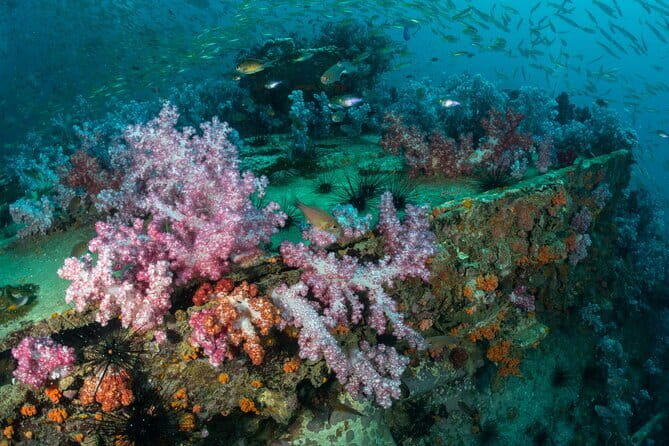
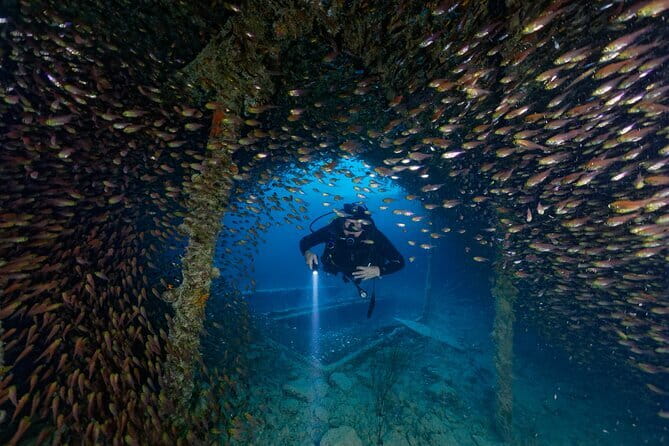
The first underwater stop is the King Cruiser Wreck, explored at about 30 meters. This is the stop most people remember because wrecks tend to look different at different depths, and you’re going deeper than the typical reef profile.
What you should picture:
- You’ll spend time working your depth control and buoyancy near an artificial structure.
- You’ll likely see the wreck’s angles and shadows differently once you’re down at that depth.
- The group is small (three to four), which helps the instructor keep an eye on everyone’s plan.
From the feedback, this wreck stop is described in a way that sounds emotional as well as visual: people call it unforgettable and hauntingly beautiful. They also credit instructors for keeping the day safe and enjoyable—names that come up include Natalie and Nat for patience and knowledge, and Max for professional, kind guidance.
A practical consideration: ear comfort. The operator lists multiple ear-related conditions as reasons you shouldn’t participate. If you’ve had trouble with equalization before, or you’re currently dealing with sinus or ear issues, take that seriously. It’s not worth pushing through just to see the wreck.
Shark Point after the wreck: lots of marine life, usually with big energy
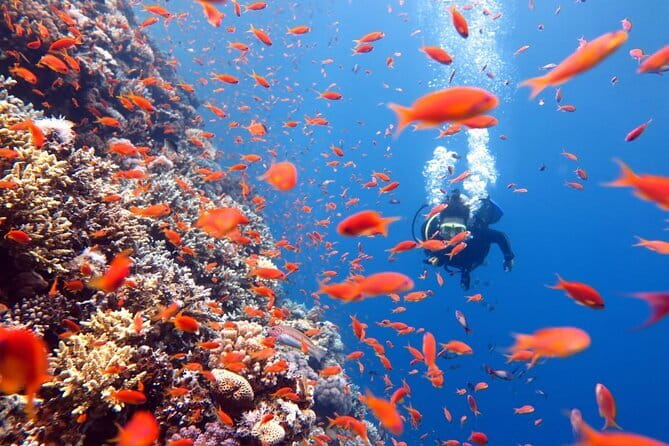
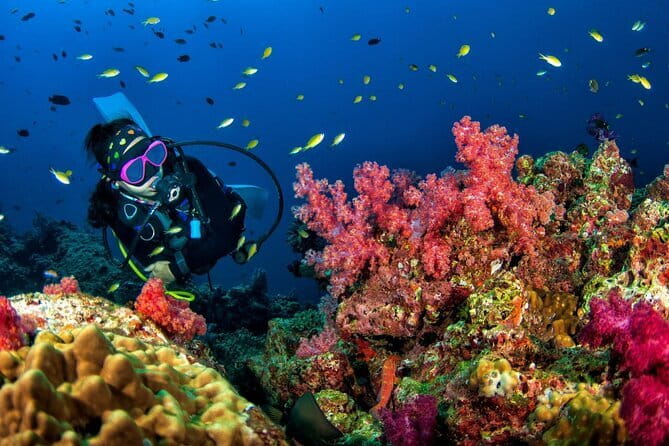
After the wreck, you move to Shark Point for another underwater session. This is the stop people seem to describe as full of life, with praise for abundant marine activity.
The big advantage of this order (wreck first, then reef) is psychological. After you’ve handled the deeper, structured wreck profile, a reef-like site can feel more fluid and relaxing. You still get underwater time, but the focus often shifts to moving through fish-and-coral terrain instead of reading a large structure.
The feedback repeatedly highlights Shark Point as a favorite, with one review calling it packed with marine life. Another simply says it was brimming with life, and they’re grateful to the instructor’s expertise and professionalism—again, Sam is specifically named for that kind of calm guidance.
One more reason I like this pairing for experienced participants: it gives your day shape. You’re not just repeating the same type of profile three times. You get a deep wreck moment, then a life-filled reef moment.
Koh Doc Mai caves: serene scenery and a different kind of challenge
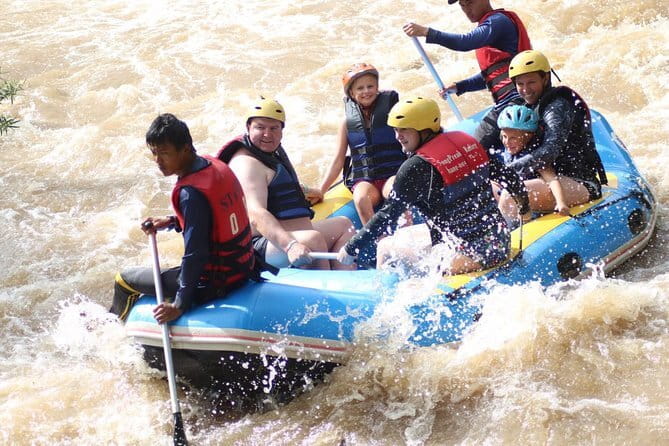
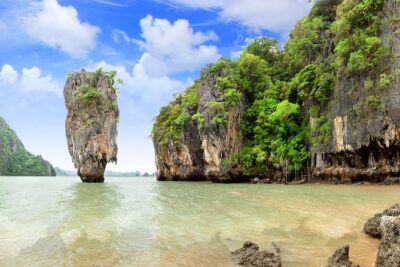
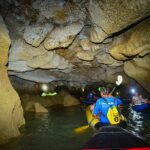
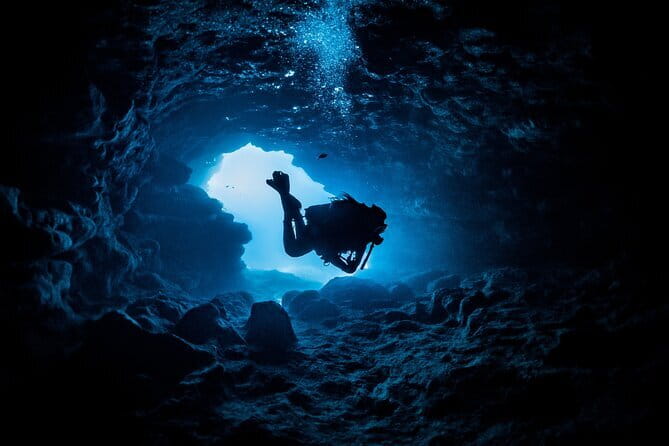
The third stop is Koh Doc Mai, which is known for caves. In feedback, people describe the caves as magical and serene, and they connect that calm feeling to what they saw underwater.
Caves add a different skill layer than open reef. Even when conditions are comfortable, you’re typically more focused on:
- staying aware of air use,
- controlling buoyancy so you don’t kick up silt,
- and following the instructor’s spacing and path.
This is also the stop where calm, precise instruction matters. Reviews praise instructors like Kob for being patient and professional, and Natalie for making the whole day safe and enjoyable.
If you’re the type who enjoys underwater detail—light rays, rock textures, and fish behavior around cave structures—this stop is often the one that feels most unique. The caves can look like a totally different world compared to open water reefs, even if the boat ride is the same.

Small groups and instructor attention: why the day feels controlled
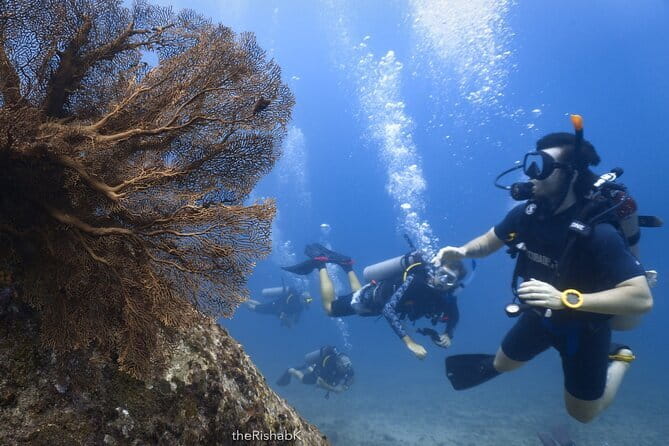
The program runs in small groups. Per session, the maximum group size is three to four participants, and the overall day has a maximum of 15 travelers. That structure matters more than it might sound.
In practice, smaller groups usually mean:
- less time waiting around,
- more frequent check-ins,
- and more consistent guidance when conditions change.
Feedback backs this up. People praise the team as smooth and organized, with instructors described as patient, adaptable, and professional. Instructor names that come through in the feedback include Sam, Natalie, Kob, Eak, and Max.
Also, the trip includes comprehensive insurance coverage for your underwater activity. I never treat insurance as a substitute for safe habits, but it does reduce the stress level when you’re dealing with travel days and schedules.
Timing and underwater time: how long you’ll really spend
The total day is about 9 hours, with return to the meeting point around 5:00 pm. Underwater time is planned with a limit: each session gives up to 50 minutes underwater, or you’ll end the session when your cylinder reaches 50 bars.
This is a useful setup for planning your energy. It also helps you avoid the common problem of guessing when you’ll run out of air. The trip’s structure nudges everyone toward consistent timing.
And because it’s multiple sessions in one day, you should also note the operator’s safety rule about flying afterward. They say you should not go to altitude within 18 hours after your last underwater session when doing multiple sessions, and where possible, wait 24 hours. If your trip includes a Phuket-to-other-city flight the same day, this is a big factor in deciding whether you want this schedule.
What you’re paying for: value beyond the ticket price

The price is $175.17 per person for a full day with three underwater stops. On paper, that number alone doesn’t tell you much. The value is in what’s bundled.
Included:
- Full set scuba gear
- Scuba insurance
- Three sites (King Cruiser Wreck, Shark Point, Koh Doc Mai)
- Boat service: breakfast, lunch, snacks, fresh fruit, and beverages
- Soft drink
- Round-trip transfers from many areas: Kamala, Patong, Karon, Kata, Rawai, Nai Harn, and Chalong
Not included:
- Alcoholic beverages
- A personal depth gauge/computer
- Optional underwater photos/videos
- Pickup outside the transfer zone (private transfers cost extra)
This is why I see the trip as good value for the right person. You’re not paying separately for gear, insurance, and meals. You’re also not scrambling for transport if you’re staying in one of the listed areas.
If you’re staying outside those zones, factor in the extra transfer cost. That’s the most common way the “cheap day” math stops adding up.
Weather, weather swaps, and how cancellations are handled
This experience requires good weather. The operator notes that sites are selected based on weather conditions, and if the trip is canceled due to poor weather, you’ll be offered a different date or a full refund.
Practically, this matters because Phuket can shift fast: wind, chop, and visibility can change the comfort level of the day. The fact that they plan for weather swaps is what keeps the trip feeling intentional rather than like a gamble.
If you’re traveling during a less stable weather window, I’d treat booking as a flexible decision. Timing can make or break visibility and comfort offshore, especially on multi-stop schedules.
Who this suits best (and who should skip it)
This is built for experienced underwater participants with Advanced Open Water certification minimum. It’s not presented as an entry-level day.
You’ll likely be a strong match if:
- you’ve handled deeper profiles before (the wreck sits at about 30 meters),
- you can manage your buoyancy carefully in different environments (wreck, reef, caves),
- and you’re comfortable with a full day schedule ending around 5 pm.
You should think twice or avoid it if you have any of the listed health exclusions, including issues related to:
- asthma/wheezing, chronic bronchitis or persistent chest complaints,
- chronic sinus problems,
- certain heart conditions,
- collapsed lung or pneumothorax history,
- perforated eardrum, recurrent ear problems, chronic ear discharge/infection,
- any illness or surgery within the last month,
- or trouble with breathlessness.
Also, follow the rule about alcohol and flying after your last underwater session. They explicitly ask about alcohol intake in the prior 8 hours and flying time after the last session. If you’re the type who likes to squeeze in late flights, you’ll need to plan your departure timing accordingly.
Should you book this Phuket 3-site day?
If you’re Advanced Open Water level and you want one day that hits variety—King Cruiser Wreck, Shark Point, and Koh Doc Mai caves—this is an easy yes. The small groups, instructor attention, included gear, and full boat meals make it feel like a well-run day, not just a ticket to offshore chaos. The best part is the “mix”: one deep wreck stop, one life-filled reef stop, and one cave experience that feels different from everything else.
I’d pass if you’re not comfortable with depth (around 30 meters), if ear or sinus issues are active, or if you need to fly soon after your last underwater session. For people who fit the experience level and health requirements, the day looks like strong value at $175.17—especially because transfers and meals are bundled.
If you want, tell me where you’re staying (area in Phuket) and your certification level (Advanced Open Water completed date). I can help you sanity-check whether the schedule and transfer zone fit your trip.
FAQ
What certification do I need?
You need at least Advanced Open Water certification to join this program.
How many underwater sessions are included, and what sites are they?
The package includes three sessions at King Cruiser Wreck, Shark Point, and Koh Doc Mai.
How long will I be underwater during each session?
Each session provides up to 50 minutes of underwater exploration, or until your cylinder pressure reaches 50 bars.
Are transfers from Phuket hotels included?
Yes, complimentary round-trip transfers are included from Kamala, Patong, Karon, Kata, Rawai, Nai Harn, and Chalong. Pickup outside the zone isn’t included.
What food and drinks are provided?
Breakfast, lunch, snacks, fresh fruits, and beverages are served on the boat. Soft drink is included, and alcoholic beverages are not included.
What scuba gear is included?
A full set of scuba diving equipment is included.
What happens if weather is poor?
The experience requires good weather. If it’s canceled due to poor weather, you’ll be offered a different date or a full refund.