REVIEW · PHUKET
Private Surf Lesson: 1-Hour Wave-Riding on Kata Beach
Book on Viator →Operated by SSS Phuket · Bookable on Viator
Private surf lessons are a good test: will you get time in the water or just hear instructions. Here you get a tight, beginner-focused plan on Kata Beach, starting with stance work and sand practice before you’re pushed into small rides. It’s designed to help you stand up quickly and learn how to position yourself so you can catch waves with less guesswork.
I especially like the small, coaching-led approach: your instructor matches a board size to you, then uses gentle pushes and selected waves so you’re not fighting the ocean from minute one. The trade-off is simple—there’s no hotel pickup—so you’ll need to get yourself to the SSS Phuket shop near the beach area.
In This Review
- Quick take: what you’ll notice fast
- How the lesson really works on Kata Beach (and why it matters)
- Meeting at SSS Phuket: location, timing, and what to plan for
- The sand briefing: where beginners get unstuck fast
- Board and rashguard: comfort is training
- In the water: gentle pushes, selected waves, and real guidance
- Photos and videos: worth it if you want to learn from your rides
- The real value of the $39.06 price
- Potential drawback: conditions can be small, and transport is on you
- Who this private Kata Beach lesson is best for
- Should you book this private surf lesson?
- Quick decision checklist
- FAQ
- Where do we meet for the surf lesson?
- Is this a private activity?
- How long does the experience take?
- Do I get instruction for both stance and pop-ups?
- Are photos and videos included?
- What surf gear is provided?
- Is hotel pickup included?
- What if conditions are poor?
- Can most people participate?
Quick take: what you’ll notice fast
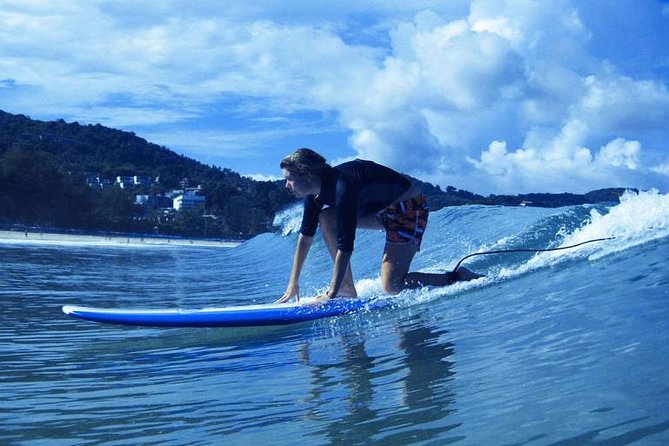
- Kata Beach setup: a short walk from the SSS Phuket shop to the water
- Board size match: your instructor picks the right board for your level
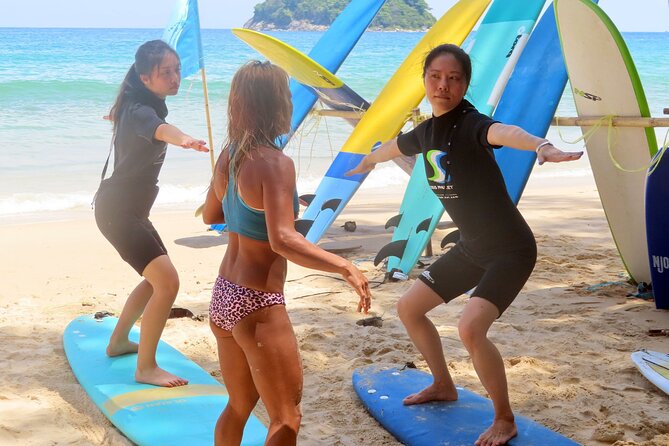
- 15-minute beach briefing: stance (goofy or regular) and sand pop-ups first
- More wave time: guidance in the water with chosen small waves
- Free action media: photos and videos included
- Private format: only your group participates
How the lesson really works on Kata Beach (and why it matters)
Kata Beach is one of Phuket’s easiest places to learn because it tends to offer options for beginners when conditions cooperate. This lesson is built around that idea: you don’t just get tossed onto a board and hoped-for the best. You get a sequence that tries to remove the biggest early problems—balance, timing, and where to sit on the board.
The structure is clear from the start. You meet at the SSS Phuket shop, where you can use a washroom before heading out. Then it’s a quick, easy stroll—about 20 meters—together to the beach. That sounds minor, but it changes the vibe. You’re not losing energy to long transfers, and you’re already warmed up and ready to listen when the briefing starts.
The lesson is private, so the coach can focus on you instead of rotating attention across a bigger group. For beginners, that matters. Your instructor can spot what’s going wrong—paddling too early, popping up with stiff knees, looking down instead of forward—and then adjust what you try next.
The big picture goal is practical: you should be standing on the board by the end of your first lesson. And then the second goal is skill transfer—learning how to paddle and catch your own waves with less help after you get a few good reps.
You can also read our reviews of more private tours in Phuket


Meeting at SSS Phuket: location, timing, and what to plan for
Your meeting point is the SSS Phuket shop at 184, 1 Koktanod Rd, Tambon Karon, Amphoe Mueang Phuket, Chang Wat Phuket 83100, Thailand. The shop is near public transportation, which is useful if you’re navigating Phuket by local options instead of a driver.
The schedule runs daily from 8:00 AM to 5:00 PM during the listed seasonal windows (April 15 through December 15 for both 2025 and 2026). Sessions can vary by the day’s conditions, so I recommend building in some flexibility.
Two practical notes from the way the lesson is described:
- There’s no hotel pickup or drop-off. You’ll want to plan how you’ll get there and back.
- Confirmation is received at time of booking, and the operator provides a mobile ticket.
If you’re staying near Kata/Karon, you’ll probably find this is one of the easier “go there yourself” activities. If you’re farther away, factor in transport time and bring a plan that doesn’t require you to sprint from a hotel lobby on lesson day.
The sand briefing: where beginners get unstuck fast

The lesson includes a 15-minute beach briefing, and that time is the difference between random effort and coaching you can apply immediately.
You start with stance: you’ll figure out whether you’re likely to surf regular or goofy (your lead foot). For new surfers, that’s not just a trivia question. If your stance is wrong, everything else feels harder—paddling direction, popping up, and even how the board sits under you.
Then it’s pop-ups on the sand. This part is simple but smart. On a board, pop-ups are chaos when you’re nervous and moving. On sand, you can practice the movement pattern until your body understands it. The goal isn’t to be perfect on land; it’s to reduce the number of things you need to think about in the water.
In a good lesson, you’ll leave the sand knowing what you should do with your arms, your feet, and your gaze. That’s what the coaching aims for here: get your basics into your muscle memory before you attempt your first rides.
Board and rashguard: comfort is training
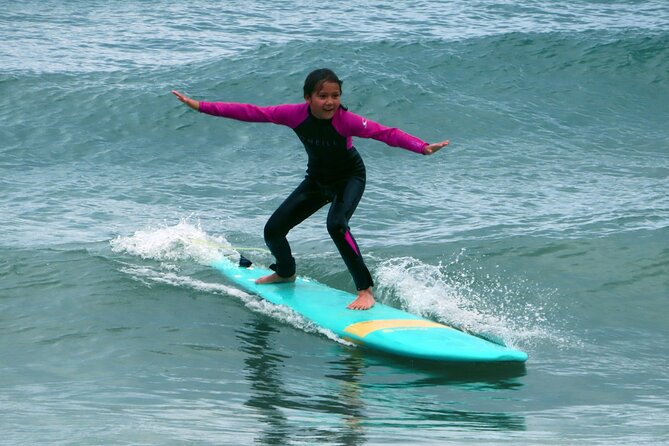
Included gear is a surf board and rashguard, and your instructor selects the board size for you. That’s a key value point. Beginners often struggle because their board doesn’t match their weight, balance, and experience level.
A good board choice helps in two ways:
- It makes paddling less of a fight.
- It improves stability so you can focus on timing the wave rather than staying upright by luck.
The rashguard helps you move comfortably and reduces friction, especially if you’re getting in and out of the water. It also gives you a bit of peace of mind about sun and skin irritation.
If you’ve never surfed before, don’t overthink equipment. The lesson includes the stuff you need, and you’re relying on the coach to match you to a board that has a fair chance of getting you standing.
In the water: gentle pushes, selected waves, and real guidance
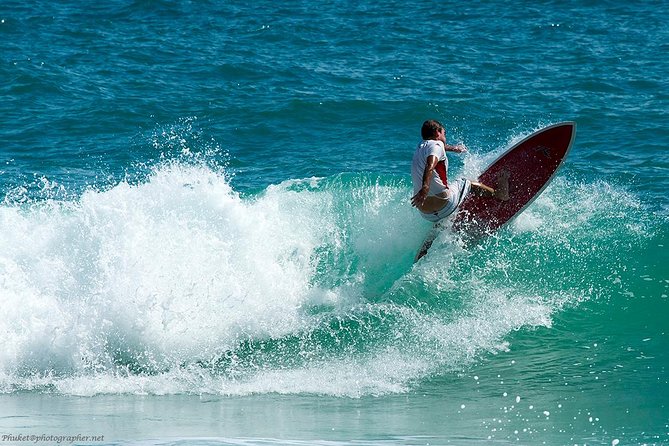
Once you’re in the water, the lesson shifts from instruction to execution. The operator’s approach is to put you on waves that match your level and then coach you on positioning and timing.
Here’s the important part: the lesson describes that you’ll be pushed into small waves so you can glide from your first ride. That “first ride” matters because it teaches your body what it feels like when you catch a wave and stand without panic. It also gives the coach something to adjust right away—your takeoff angle, paddle rhythm, and how quickly you should move from lying to popping up.
You’re not just watching. You’re doing. The experience also emphasizes plenty of water time catching waves with guidance, which is what you want in a short lesson. If you spend most of your two hours standing around, you’ll lose the momentum that builds confidence.
As the session continues, you should learn to:
- paddle more effectively,
- catch your own waves, and
- ride at least a few times with less push-in support.
That progression is what makes it feel like more than a “try surfing once” activity. By the end of the lesson, you’re aiming for solo wave catching, even if it’s imperfect. That’s how you turn a fun moment into a skill you can practice later.
You can also read our reviews of more tours and experiences in Phuket





Photos and videos: worth it if you want to learn from your rides
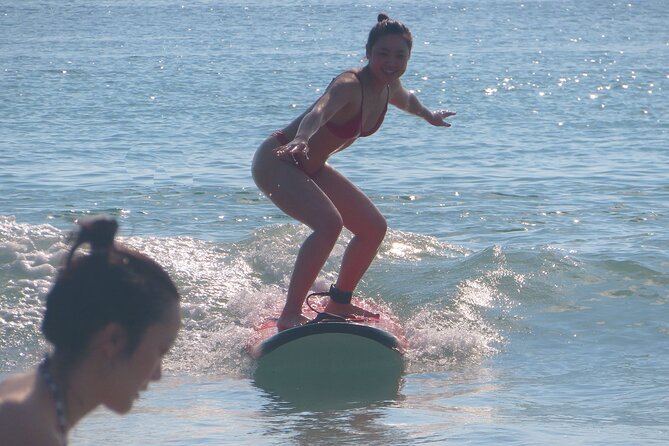
The lesson includes photos and videos. For a beginner, that can be more valuable than it seems. You’ll usually have one or two things you feel were wrong—like you thought you stood up too late or you kept looking down. A video can show you what your body actually did.
Also, action media turns the lesson into something you can share and remember without relying on memory alone. Surfing moves fast. Even if you feel like you rode for a long time, video makes it real and gives you something to compare against future sessions.
If you’re the kind of person who likes to improve, ask yourself what you’ll want to review after. If your goal is just to have fun, you’ll still appreciate having proof you did it.
The real value of the $39.06 price

At $39.06 per person, this isn’t priced like a luxury day trip. For what you get—private instruction, a board, a rashguard, plus photos and videos—it’s positioned as an accessible way to learn without spending big.
What you should consider is how “private” works for you. It’s private in the sense that only your group participates. If you’re going solo, the price still makes sense if you want one-on-one attention. If you’re a pair, it may feel like a reasonable way to split the cost while still staying private.
Also, the session duration is listed as 2 hours (approx.), even though the title highlights 1 hour of wave riding. That means part of the time is teaching and positioning. In surf lessons, that teaching time is not filler—it’s what gets you standing sooner and helps you avoid wasting the best part of the session floundering.
If you’ve been tempted by cheaper lessons, this price is usually what you pay for consistent coaching and equipment that’s chosen for you rather than assigned randomly.
If you’re hoping for huge waves, tricks, or a long training arc, you’ll be disappointed. This is a beginner lesson with the focus on standing and catching manageable rides.
Potential drawback: conditions can be small, and transport is on you
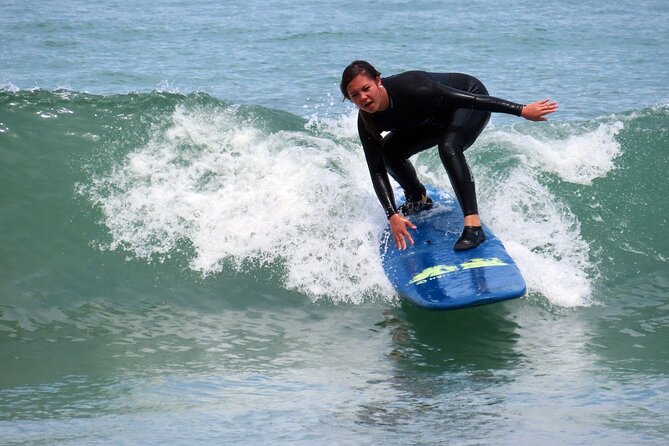
One concern you should acknowledge is wave size. The lesson selects waves for your level, and small waves are part of the plan. On a day when surf is limited, your rides may feel shorter or more gentle than you hoped.
That’s not a defect in the instruction. It’s the reality of surfing instruction. A good coach doesn’t chase spectacle for beginners. They chase learning outcomes.
The other drawback is logistics: no hotel pickup and drop-off. You’ll want to confirm how you’ll reach the meeting point and how you’ll get back afterward, especially if you’re staying somewhere more distant from Kata/Karon.
If you’re comfortable handling your own transport, this is an easy fix. If you need door-to-door service, it may not be the best fit.
Who this private Kata Beach lesson is best for
This lesson is a strong match if:
- you’re a true beginner (or returning after a long break),
- you want a coach guiding you in the water, not just talking on the sand,
- you like a clear progression from stance → sand pop-up → first rides → more independent wave catching,
- you care about capturing the experience on photos and videos.
It’s also a decent option if you want something compact. Phuket can be full of long day tours. This one is short enough to keep your energy up for the rest of your trip.
If you’re an advanced surfer hoping for big-wave technique, you’ll likely find it too basic. This is about standing up and learning positioning, not high-performance maneuvers.
Should you book this private surf lesson?
If your goal is a beginner-friendly start on Kata Beach with real coaching, I’d book it. The included gear, the sand briefing, the push into small waves, and the push toward catching your own waves are exactly what you need to avoid the most common beginner frustration: not knowing what to do once you’re out there.
I’d skip it (or at least look for alternatives) if you strongly need hotel pickup, or if your idea of “surfing” is big, dramatic rides. Also, go into it with flexible expectations about wave conditions. When it’s small, this lesson is set up to still help you stand and learn.
Quick decision checklist
- You can get yourself to SSS Phuket.
- You want beginner instruction that prioritizes actually getting on the board.
- You like the idea of a private coach and getting photos/videos.
If those boxes fit, Kata Beach plus a focused private lesson is a very smart use of a Phuket afternoon.
FAQ
Where do we meet for the surf lesson?
You’ll meet at SSS Phuket, 184, 1 Koktanod Rd, Tambon Karon, Amphoe Mueang Phuket, Chang Wat Phuket 83100, Thailand.
Is this a private activity?
Yes. It’s a private tour/activity, and only your group will participate.
How long does the experience take?
The duration is listed as 2 hours (approx.).
Do I get instruction for both stance and pop-ups?
Yes. The session includes a beach briefing with help finding your stance (goofy or regular) and practicing pop-ups on the sand.
Are photos and videos included?
Yes. Photos and videos are included.
What surf gear is provided?
You’ll receive a surf board and a rashguard as part of the lesson.
Is hotel pickup included?
No. Hotel pickup and drop-off are not included.
What if conditions are poor?
The experience requires good weather. If it’s canceled due to poor weather, you’ll be offered a different date or a full refund.
Can most people participate?
The listing says most travelers can participate, and you’ll receive confirmation at the time of booking.