REVIEW · PHUKET
Phuket Tour to Karon View Point, Big Buddha and Wat Chalong
Book on Viator →Operated by Travel Asia Experiences · Bookable on Viator
Three big sights, one well-paced day. This Phuket tour strings together Karon View Point for panoramic photos and Wat Chalong for a moving look at local religious life, plus the towering Big Buddha. The one drawback to keep in mind is that most stops are short (often about 30 minutes), so you’ll be more in sightseeing-and-photos mode than slow wandering.
I also like that it’s built for convenience: hotel pickup and drop-off, an air-conditioned vehicle, and admission marked as free for the listed main stops. That makes the price feel more like you’re paying for your guide, the drive between sights, and the structured stops rather than paying separate entry fees all day. If you’re the type who hates time pressure, plan to slow down during the viewpoints and save extra time for Old Phuket Town if that’s your priority.
In This Review
- Key highlights
- How this Phuket loop works: 10:00 to about 15:30
- Karon View Point (Khao Saam Haad): the shortcut to the best wide-angle views
- How to make the most of the 30 minutes
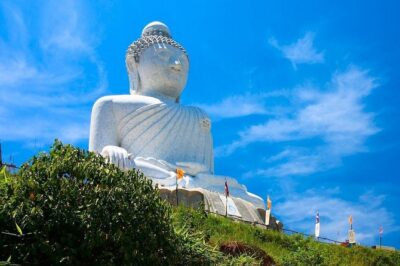
- Big Buddha Phuket on Nakkerd Hills: a 45-meter marker for the whole island
- What you’ll notice when you’re actually there
- Wat Chalong (Chaithararam): Luang Pho Chaem, Luang Pho Chuang, and the 1876 link
- Temple basics that make the visit smoother
- Cashew nut factory and the idea of Phuket-produced flavors
- A practical way to handle the factory stop
- Old Phuket Town: Baba community heritage on Rasada, Phang Nga, Thalang, Dibuk, and Krabi
- Why this final stop pairs well with the temples and viewpoints
- Price and value at $60.41 per person: what you’re really paying for
- Who this tour fits best—and who might want a different plan
- Should you book this Phuket tour?
- FAQ
- What are the main stops on this Phuket tour?
- How long is the tour?
- Is hotel pickup and drop-off included?
- Are admission tickets included for the major sights?
- Is this a private tour?
- Is a minimum number of people required?
- Is the tour SHA Plus certified?
- Can I request a language other than English?
- What if I need to cancel?
Key highlights
- Karon Hill viewpoints with clear views of Kata Noi, Karon Beach, and Kata Yai
- Big Buddha at Nakkerd Hills (about 45 meters tall), visible from far around Phuket
- Wat Chalong (Chaithararam) and its monk-hero Luang Pho Chaem story tied to 1876
- Cashew nut factory stop with a chance to learn why Phuket-grown cashews can be cheaper
- Old Phuket Town walk through Baba community heritage and the five-road core
How this Phuket loop works: 10:00 to about 15:30
This is a classic Phuket highlights circuit: viewpoint first, then the island’s main Buddhist landmarks, then a city-style cultural finish. The schedule starts around 10:00 and returns to your meeting point around 15:30, even though the tour summary calls it about 4 hours. Realistically, you’re spending time in the car between stops, and the day is paced so you can cover a lot without feeling like you rushed straight past everything.
You’re riding in an air-conditioned vehicle with a professional guide, and hotel pickup and drop-off is included for centrally located hotels in Phuket. If you’re staying near busier areas like Patong, Karon, or Kata, this kind of stop-and-go tour can save you a lot of hassle compared with trying to stitch together multiple rides yourself.
One more practical note: the stops include religion and viewpoints, but the itinerary also includes a cashew nut factory and mentions a gems gallery visit. That means the day includes both culture and commercial learning/browsing, which some people love and others would rather skip.
You can also read our reviews of more tours and experiences in Phuket.

Karon View Point (Khao Saam Haad): the shortcut to the best wide-angle views
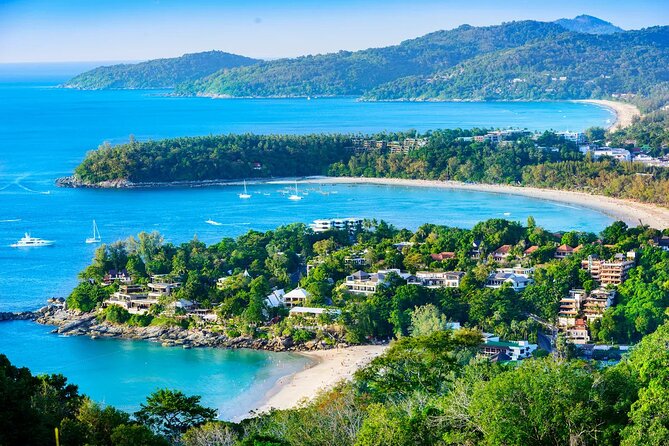
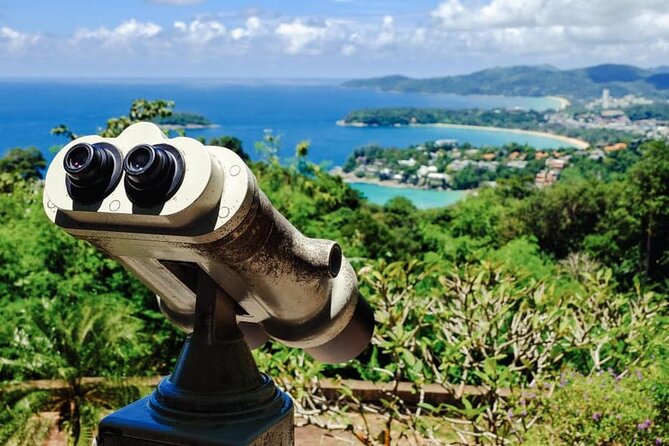
You start at Karon Beach and then head up to Karon View Point. From the top, you get sweeping views over Kata Noi, Karon Beach, and Kata Yai. It’s also one of those rare places where the details are easy to read: the hills, the shoreline curve, and even the smaller nearby island Koh Pu show up when visibility is good.
Locals call it Khao Saam Haad, meaning Three Beaches Hill, and it’s exactly that—one hill, three major beaches laid out in front of you. The tour description also points out why this spot is so photographed: sparkling sea, white surf, and the contrast between beach color and the deep green of Phuket’s hillsides.
How to make the most of the 30 minutes
Since your time here is about 30 minutes, you’ll want to treat it like a quick photo sprint with a calm pause at the end. I recommend arriving ready with water, sun protection, and a simple plan for photos first—then take a slow minute just to enjoy the view. If you’re going in warm daytime conditions, the hill can feel hotter than beach level.
A small consideration: Karon View Point is an outdoor climb. Comfortable shoes help, especially if you’re not used to uneven steps or slick surfaces when it’s humid.
Big Buddha Phuket on Nakkerd Hills: a 45-meter marker for the whole island
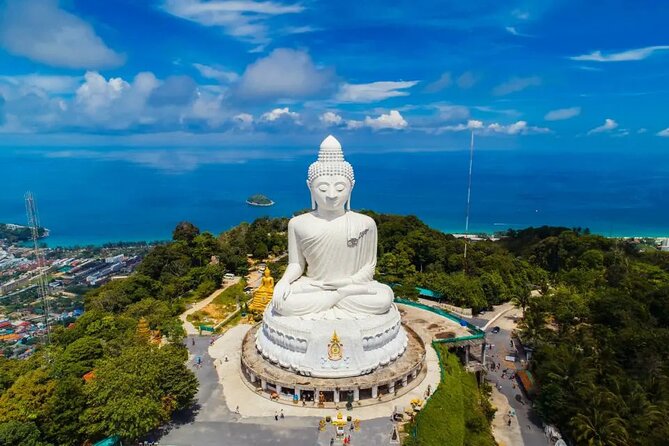
After the first viewpoint, the tour moves to Big Buddha Phuket. The key detail here is scale: the Buddha image sits atop the Nakkerd Hills between Chalong and Kata, and it’s about 45 meters tall. The tour description notes that it can be seen from Phuket Town and Karon Beach, which tells you why this is one of Phuket’s best “orientation” sights. It’s like the island’s giant bookmark.
Time here is around 30 minutes, so it’s not a long temple study session. You’re there to see the monument, take photos from the area around it, and get the sense of how religious sites in Phuket are built to be seen from miles away.
What you’ll notice when you’re actually there
Big Buddha Phuket works for first-timers because it’s visually clear even if you don’t know Buddhist symbolism yet. You get the monument, you get the location, and then you can let your guide fill in the story during the time you’re there. If you like destinations that give you both a viewpoint and a landmark, this stop does that job well.
If you’re visiting for the calm side of temples, keep expectations realistic: monuments like this tend to draw crowds. The upside is that the experience is structured, so you’re not trying to guess where to go or how long to spend.


Wat Chalong (Chaithararam): Luang Pho Chaem, Luang Pho Chuang, and the 1876 link
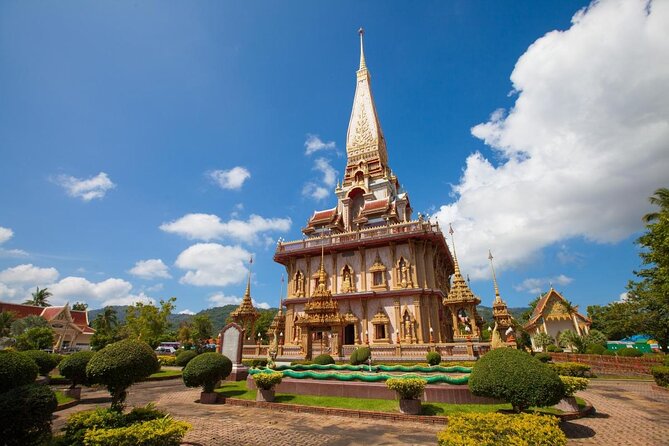
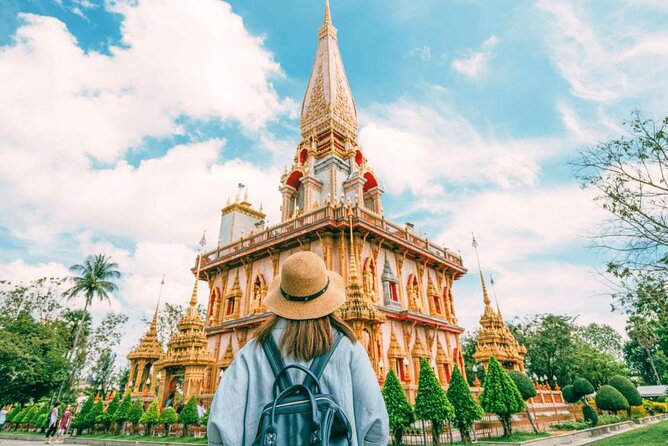
Next comes Chaithararam Temple, usually just called Wat Chalong. This is described as Phuket’s most famous and beautiful monastery, and the itinerary gives you time for a proper look at the temple grounds. The tour highlights two key figures the temple enshrines: monk-hero Luang Pho Chaem and his assistant Luang Pho Chuang, both revered locally for their roles in quelling a miner rebellion in 1876.
That specific historical hook matters because it turns Wat Chalong from just a pretty temple stop into something with local meaning. You’ll see gilded religious statues tied to a story that locals connect to their community memory. Even if you only catch pieces of the story, it gives you a reason to pay attention to what you’re seeing instead of treating it as a quick photo stop.
Temple basics that make the visit smoother
You don’t need to be a scholar to be respectful here, but you do want to dress appropriately. Plan for temple etiquette by covering shoulders and knees. Also, remember this is an active religious space, so keep your phone time respectful and save your loudest conversations for outside.
Because the tour schedule includes another stop right after Wat Chalong, your time at the temple is likely focused. Take what you can from the guide’s explanation, then enjoy the slower moments once you’ve found a quiet spot.
Cashew nut factory and the idea of Phuket-produced flavors
After Wat Chalong, the itinerary includes a cashew nut factory stop. The tour frames it as a must for cashew lovers, which makes sense because Phuket is known for producing cashews locally. The description also adds a useful pricing context: cashews are native produce grown in Phuket and other provinces in Southern Thailand, and they can be relatively cheap compared to what you’d pay in Western countries.
This stop is about more than snacks. It’s a quick, structured way to understand how a local product moves from agriculture to the market. You’re not doing a deep agricultural course, but you are getting context—where the nuts come from and why local pricing can be different.
A practical way to handle the factory stop
Set expectations that this is also a browse-and-buy kind of environment. If you’re not interested in shopping, treat it like a learning stop: watch the process, ask one or two questions, and then take the opportunity to pick up something small only if it fits your taste and budget. And if you do buy, remember you’re paying for convenience, packaging, and availability, not just raw nuts.
Old Phuket Town: Baba community heritage on Rasada, Phang Nga, Thalang, Dibuk, and Krabi
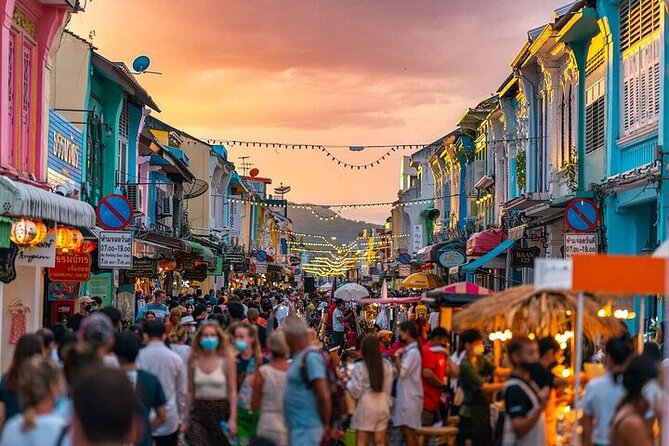
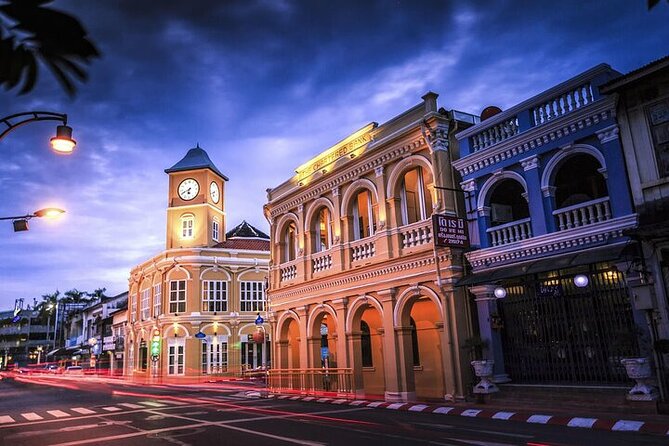
The day ends with Old Phuket Town, where you can see the heritage of the Baba community. The itinerary points out that this heritage shows up in architecture, commerce, clothes, and everyday way of life. In other words, it’s not just a museum-feel stop. It’s a walk-through of a neighborhood identity.
The core of Old Town is described as five main roads and several smaller streets (sois): Rasada Rd, Phang Nga Rd, Thalang Rd, Dibuk Rd, and Krabi Rd. This matters because it gives you a simple mental map. You can focus on those streets and then let your guide steer you through the smaller lanes.
Why this final stop pairs well with the temples and viewpoints
If the morning gives you the island’s physical view and spiritual landmarks, the afternoon gives you the human view—how communities built trade and culture into the streets. Wat Chalong connects to local belief and local memory. Old Phuket Town connects to local identity shaped by trade and community life. Put together, you get a fuller sense of Phuket than you would from beaches alone.
Since you’re there only briefly, treat it as a walk to reset your brain after temple sightseeing: breathe street air, look at facades, and take a few photos where you like the details. The goal isn’t to see everything—it’s to land on the part you care about most.
Price and value at $60.41 per person: what you’re really paying for
At $60.41 per person for about a half-day itinerary, the value depends on what you hate doing. You’re getting air-conditioned transport, a professional guide, and hotel pickup and drop-off. You’re also not paying separately for the listed main stops, since the itinerary notes Admission Ticket Free for each of the core sightseeing items (Karon View Point, Big Buddha, Wat Chalong, and the listed others).
So the money mostly covers three things:
- the convenience of door-to-door pickup and drop-off,
- the guide’s time and explanations across multiple locations,
- and the driving between Phuket’s different zones.
If you’re traveling with limited time or you don’t want to spend your day coordinating transport, this kind of packaged itinerary can feel like a fair deal. If you’re comfortable hiring your own ride and you love slow exploration, you might find you can spend less by going solo—but you’ll likely spend more time figuring out how to link everything.
Also, the tour notes group discounts and pickup offered, so the pricing can get even better if you’re not traveling completely solo.
Who this tour fits best—and who might want a different plan
This tour makes the most sense if you want a strong set of Phuket highlights in one day: Karon View Point, Big Buddha, Wat Chalong, plus a cultural walk in Old Phuket Town. It’s also a good fit if you like the idea of a guided structure: you get explanations at the stops and a plan for where to go next.
It’s less ideal if you want long time at one place. Because multiple stops are timed (often around 30 minutes), the day is designed for coverage. That means you may not get the deep, unhurried feel you’d have if you booked one site and stayed there longer.
If you’re visiting with kids or anyone who prefers fewer transfers, consider that the itinerary includes driving time, a hill viewpoint, and temple walking. Most people can participate per the tour info, but you’ll still want practical footwear and a quick rhythm that works for your group.
Should you book this Phuket tour?
If you’re a first-time Phuket visitor and you want a single day that covers viewpoints, a major Buddha monument, a standout monastery, and Old Town streets, I think this is a smart book. It’s the kind of itinerary that helps you get your bearings fast and leaves you with clearer ideas of what to return to later—like whether you want a second beach day at Kata/Karon, or more time in Old Phuket Town.
I’d skip it if you hate time pressure or if you’d rather spend your day fully on the beach. And if you’re very price-sensitive, compare it against the cost of separate transport and entry fees—because this tour’s main savings is in the included structure and the marked free admissions.
FAQ
What are the main stops on this Phuket tour?
The tour includes Karon View Point, Big Buddha Phuket, Wat Chalong (Chaithararam Temple), a cashew nut factory stop, and Old Phuket Town.
How long is the tour?
The tour is listed as about 4 hours (approx.), and the provided schedule runs from about 10:00 to around 15:30.
Is hotel pickup and drop-off included?
Yes. Hotel pick-up and drop-off is included, for centrally located hotels in Phuket.
Are admission tickets included for the major sights?
Admission is marked as free for the listed main sightseeing stops in the itinerary.
Is this a private tour?
Yes. It’s described as a private tour/activity, meaning only your group participates.
Is a minimum number of people required?
Yes. The tour info says a minimum of 2 pax is required to start for the join tour. If the minimum is not met, the tour might be canceled with a full refund or moved to the next schedule.
Is the tour SHA Plus certified?
Yes. It’s SHA Plus certified, with a certificate indicating approved Covid-19 health and preventative protocols and that 70% or more of employees have been fully vaccinated.
Can I request a language other than English?
Yes, but it requires 48 hours to arrange a special language request. The info also notes the operator may cancel with a full refund if booking is made less than 48 hours before.
What if I need to cancel?
This experience is described as non-refundable and cannot be changed for any reason. If you cancel or request an amendment, the amount paid is not refunded.