REVIEW · PHUKET
Phuket Jungle Trekking Experience at Khao Phra Taew National Park
Book on Viator →Operated by Oh-Hoo · Bookable on Viator
Rainforest trekking beats Phuket’s standard excursions. I like that the small group size keeps it personal, and the English-speaking licensed guide helps you read the trail and spot wildlife in Khao Phra Taew National Park. One heads-up: this is a real hike, with uneven jungle paths and a route that can shift with weather, so it may not suit limited mobility.
You’ll start early at 7:30am, head toward Tonsai waterfall, and spend about 6 hours moving through one of Phuket’s biggest rainforest sanctuaries. Refreshments are part of the plan (fresh fruit and water during the trek, soft drink afterward), and the day ends feeling like you actually escaped the beach circuit.
In This Review
- Key things I’d plan around before you go
- Khao Phra Taew at 7:30 AM: why this trek feels different
- Price and logistics: what your $82 actually buys
- Getting to the start: pickup zones that matter
- The 6-hour plan: from rainforest trails to Tonsai waterfall rinse
- Morning: into Khao Phra Taew’s rainforest
- Mid-trek: jungle stops and refreshment breaks
- The highlight stop: Tonsai waterfall
- Higher up: giant palm leaves and the “lost world” feeling
- Wildlife spotting with a guide: what to expect (and what to respect)
- Your guide and the trail: why “licensed” isn’t just a label
- How hard is it, and what should you wear?
- Weather and route changes: plan for flexibility
- Who should book this trek (and who should pass)
- Should you book this Phuket Jungle Trek at Khao Phra Taew?
- FAQ
- What time does the Phuket jungle trekking tour start?
- How long is the Khao Phra Taew jungle trek?
- How big is the group?
- Is there a guide, and what language do they speak?
- What’s included in the price?
- Where does pickup include round-trip transfers?
- Are there extra transfer charges for some areas?
- Does the route ever change?
- What if the weather is bad?
Key things I’d plan around before you go
- Small-group pace (max 12 people) means less waiting and more chances to ask questions.
- Hotel pickup from select areas can make the morning painless, but some neighborhoods cost extra.
- Tonsai waterfall time includes a cool-off and a jungle shower moment for photos.
- Wildlife spotting focus (crabs, frogs, snakes, iguanas, and gibbons if you’re lucky) keeps the trek interesting.
- Trails aren’t always obvious in rain-slick jungle, so a guide matters for wayfinding.
Khao Phra Taew at 7:30 AM: why this trek feels different
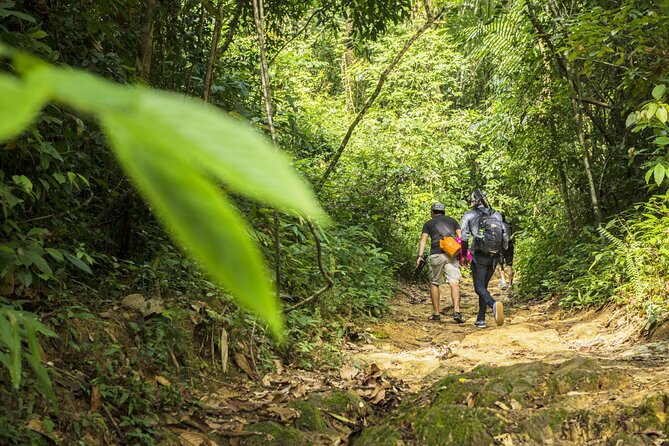
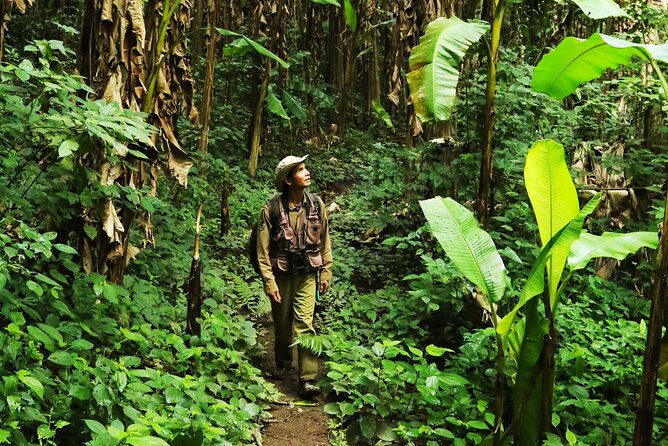
Phuket can be all beaches and big-bus tours. This experience swaps that for a licensed guide, a small group, and a rainforest that feels like it goes on forever. Khao Phra Taew National Park is Phuket’s largest rainforest sanctuary, and the hike is built to show you what that means in real life: thick canopy, wet stones, and plants that look like they were engineered by nature for one purpose—survival.
The best part is how you move. You’re not just “walking in the jungle.” You’re trekking with a guide who is actively looking for wildlife and teaching you what to notice along the way. And when you hit the water, you don’t just admire the waterfall—you get a chance to rinse off and cool down under it.
That early start at 7:30am also helps. The jungle is much more pleasant before the day heats up, and it gives you a better shot at seeing the small stuff—frogs, crabs, and other creatures that tend to be more active when conditions are right.
You can also read our reviews of more hiking tours in Phuket

Price and logistics: what your $82 actually buys
At $82.29 per person, this trek is priced like a midrange Phuket activity—but you’re paying for the whole package, not just the hike. The day includes:
- Round-trip transfer from select areas (and specific transfer options depending on where you start)
- Park entrance fees (200 baht per person is included)
- English-speaking, licensed Thai guide
- Insurance
- Fresh fruit and water during the trek
- Soft drink after trekking
That bundle is what makes the value work. Jungle trekking isn’t cheap if you have to handle transport, pay entrance fees separately, and find a legit guide on your own. Here, the structure is already put together.
The part to watch is transfers outside the included pickup zones. The tour lists extra transfer charges for certain Phuket areas (for example, Nai Thon, Nai Yang, Mai Khao, Panwa, Layan, Nai Harn, Phuket town, and others). Solo travelers from the Phuket area have an additional solo transfer charge noted as well. If you’re staying in a more central beach area like Patong or Karon, you’re more likely to fall into the included pickup zones.
If you want the easiest morning possible, this is one of those tours where checking your hotel location against the pickup list is worth 2 minutes of attention.
Getting to the start: pickup zones that matter
Pickup is offered from several common Phuket areas, including Kata, Karon, Tri Trang, Patong, Kalim, Kamala, Surin, plus Bang Tao and Laguna (with the note that some options depend on group size). If you’re outside those zones, you’ll want to plan for the extra transfer charge that’s listed for specific areas.
This matters because jungle trekking days live or die on timing. You start at 7:30am, so if you’re relying on patchy local transport, you may arrive rushed. With pickup, you can relax, show up on time, and get into the right headspace: comfortable enough to start hiking, alert enough to enjoy what you’ll see.
One more practical point: the meeting point is described as near public transportation, so even if you handle your own ride part of the way, there’s a reasonable backup plan.
The 6-hour plan: from rainforest trails to Tonsai waterfall rinse
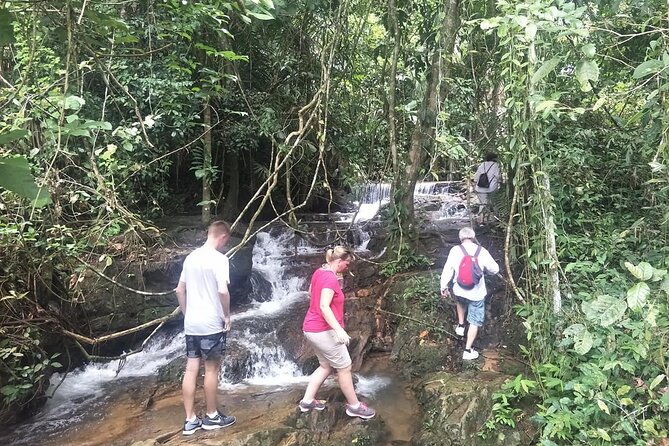
This is a “moving day,” not a long sit-and-look kind of tour. The total time is about 6 hours, and the rhythm is: walk, stop, learn, and cool off when you reach the main water area.
Morning: into Khao Phra Taew’s rainforest
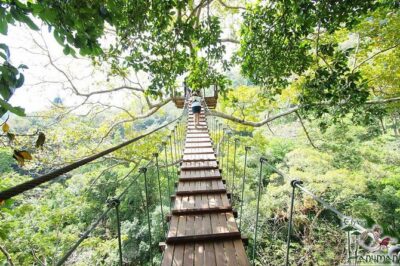
Once you start, the hike takes you through winding jungle trails with constant small changes in terrain and footing. This is where having a guide helps immediately. Jungle routes can be rerouted when bamboo is down or when foliage blocks the usual path. Without a guide, you can waste time guessing direction—or end up taking the wrong path.
Your guide also keeps an eye on animal cues. Expect frequent “look down, look here” moments for creatures that blend into leaf litter or hang around damp edges of the trail. Even when you don’t spot an animal, you’ll often learn what to look for next time: tracks, movement, or the kinds of places certain animals prefer.




Mid-trek: jungle stops and refreshment breaks
Part of the tour value is simple: you get fresh fruit and water during the trek, rather than having to carry everything yourself. You also get a soft drink afterward. This keeps the energy up for the higher, sweatier part of the hike and helps you avoid the classic problem on tropical hikes—running out of water at the moment you’d most like to slow down and pay attention.
In warm, humid conditions, those breaks aren’t just comfort. They keep you moving safely. When you’re tired and hot, your footing gets sloppy. Refreshment timing helps keep your pace steady.
The highlight stop: Tonsai waterfall
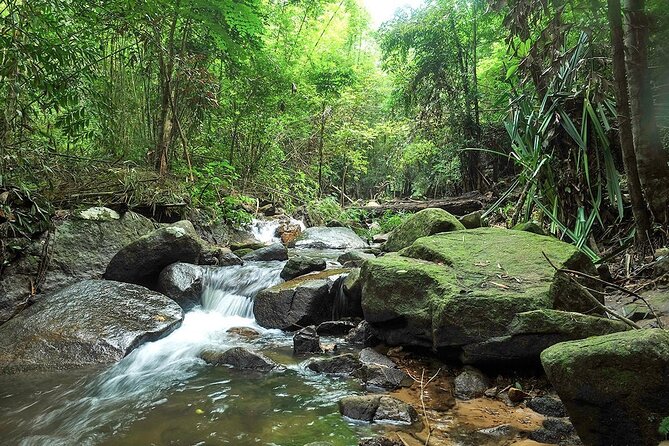
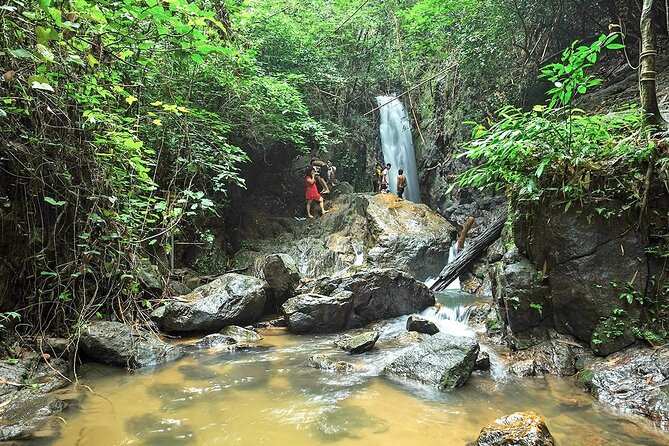
The route includes a waterfall stop at Tonsai waterfall. This isn’t just a photo pause. The plan includes time to cool off and enjoy a jungle shower under the waterfall, which makes the experience feel physical in the best way. Your clothes will likely get damp, your hair will smell like wet leaves, and you’ll remember the moment because your body actually cools down.
It’s also a natural moment for photos—wet rock textures, bright green canopy, and the contrast between sun and shade under the falls.
Higher up: giant palm leaves and the “lost world” feeling
As you trek higher in the Khao Phra Taew mountain range, the vegetation changes, and that’s part of what makes the hike satisfying. One of the standout natural features mentioned is the giant palm leaves, which are a big reason this area is seen as Phuket’s largest and most important rainforest sanctuary.
If you’re lucky, this higher zone is also where your guide may try to call in sightings of primates like gibbons. You’re not guaranteed it, but the day is organized around the kind of habitat where gibbons can live and move—so it’s a legitimate chance, not a random “maybe.”
Wildlife spotting with a guide: what to expect (and what to respect)
This trek is built around the idea that you’ll notice more when someone local is pointing things out. Your guide is watching for animals like:
- Red crabs
- Sweet water shrimps
- Giant spiders
- Frogs
- Snakes
- Iguanas
- And, if you’re lucky, white-handed gibbons
Even when you don’t see the animal itself, you’ll learn what’s normal in this habitat. That turns the hike from a workout into a real nature walk, where you know why a damp trail matters or why an animal might appear near moving water.
From past experiences on this tour, guides have also brought extra personality to the group. In some groups, a friendly hike dog has accompanied the trek—names like Kao or Caw have shown up in descriptions. If that happens for your group, it adds a calmer, more playful energy without distracting from the hike.
Small note: you don’t need to rush to chase sightings. The guide will manage where you stand and how long you pause, and you’ll get better luck by staying quiet and still when something moves.
Your guide and the trail: why “licensed” isn’t just a label
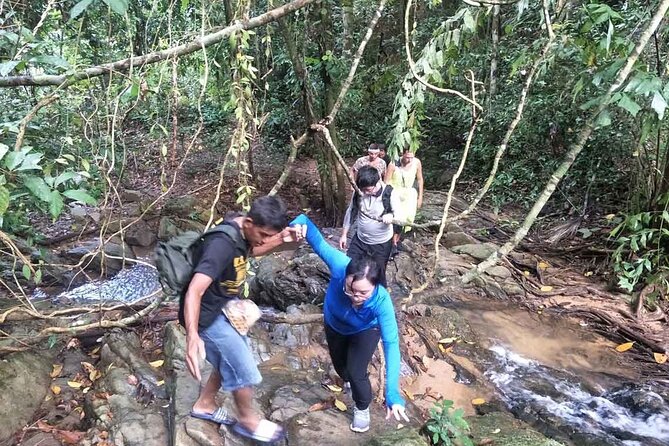
The biggest practical lesson here is that jungle trails aren’t always obvious. Even if you’re the type who likes exploring on your own, this park’s trails can be affected by rain and growth. In the past, people have specifically said the advice to hike with a guide is worth it because trails can be rerouted and not always well marked.
That’s the real advantage of using an English-speaking, licensed Thai guide: you get safety and you get efficiency. You spend time enjoying the rainforest rather than playing compass roulette.
And the guide’s job isn’t only navigation. It’s also interpretation—explaining what you’re looking at, why it matters, and how the ecosystem connects. In multiple group experiences, guides have been described as friendly and willing to share lots of info about the local plants and animals along the trek.
How hard is it, and what should you wear?
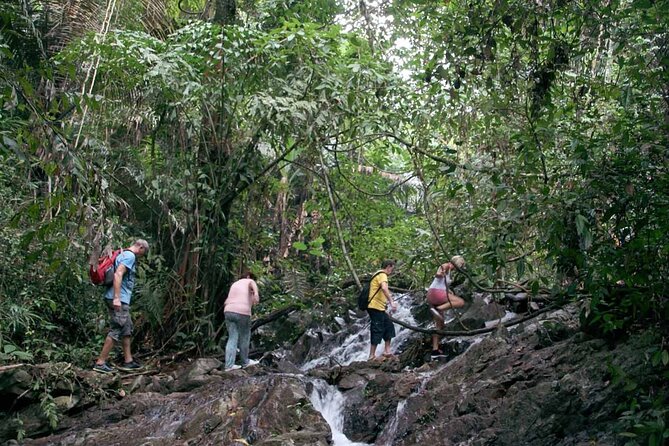
This hike involves sweating. It’s also uneven. Expect humidity, wet rocks, slippery leaves, and paths that can be more strenuous than a casual walking tour.
If you’re in reasonable shape, you’ll likely find it manageable—just plan for exertion. If you struggle with mobility, the hike can be challenging. The tour is designed for movement through natural terrain, so there’s not much in the way of leveling the playing field.
So wear:
- Shoes with solid grip (something that handles wet surfaces)
- Lightweight clothes that can get damp
- Sun protection for the starts and stops (canopy helps, but you’re still outdoors)
- Something quick-dry if you want to feel more comfortable after the waterfall
You’ll also likely get splashed at the falls. That’s part of the fun, just don’t pretend it’s a dry hike.
Weather and route changes: plan for flexibility
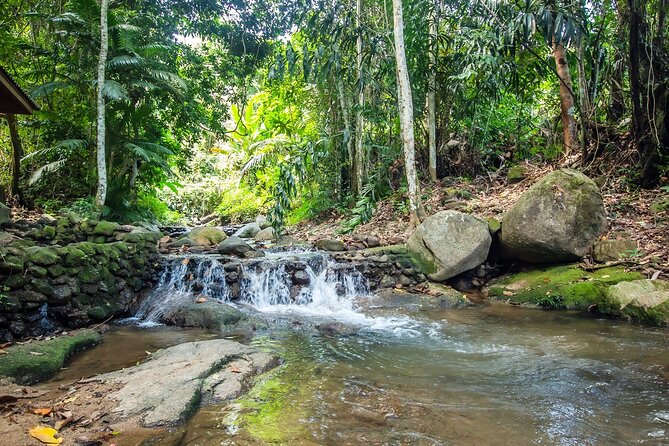
This activity requires good weather. When weather is poor, the tour is adjusted: you’ll be offered another date or a full refund. On lighter weather days, the route can still shift depending on conditions, and that’s normal for a rainforest hike.
The practical take: don’t schedule this as your only outdoor plan on a day with uncertain weather. Keep a little slack in your schedule, and be okay with the fact that the jungle will sometimes decide the route for you.
The upside is that route flexibility is also part of getting you to the best sections safely—especially in a place where down bamboo or blocked trail sections can happen.
Who should book this trek (and who should pass)
This is a strong choice for you if:
- You want a real jungle experience rather than a quick scenic stop
- You enjoy nature walks that include wildlife awareness
- You like the structure of pickup, entrance fees, and a guide handling the route
- You want small-group energy (max 12) so the hike feels more personal
It’s probably not the right fit if:
- You have limited mobility or find uneven outdoor terrain difficult
- You need a totally predictable, flat walking route
- You’re looking for a light, casual stroll with minimal sweat
If you want to add variety to your Phuket trip—something that feels like you stepped off the standard track—this is one of the better ways to do it.
Should you book this Phuket Jungle Trek at Khao Phra Taew?
Book it if you want an early-morning rainforest hike with a licensed guide, a good chance at seeing interesting wildlife, and a memorable cooling stop at Tonsai waterfall. The value works best when your hotel lines up with the included pickup zones, but even then, the included park fees, insurance, and basic refreshments make it a straightforward day.
Don’t book it if your priority is an easy walk, dry conditions, or minimal exertion. This is jungle terrain, and it asks you to participate with your body.
If you’re the type who enjoys learning what you’re seeing—crabs, frogs, spiders, and the possibility of gibbons—and you’re okay getting sweaty and damp, you’ll likely come away feeling like you experienced Phuket beyond the obvious.
FAQ
What time does the Phuket jungle trekking tour start?
The tour start time is 7:30am.
How long is the Khao Phra Taew jungle trek?
The duration is about 6 hours.
How big is the group?
The tour has a maximum of 12 travelers.
Is there a guide, and what language do they speak?
Yes. You’ll have an English-speaking, licensed Thai guide.
What’s included in the price?
Included items are round-trip transfers from select Phuket areas, fresh fruit and water during the trek, a soft drink after the trek, the national park fee of 200 baht per person, insurance, and the English-speaking licensed Thai guide.
Where does pickup include round-trip transfers?
Pickup and round-trip transfers are listed for Kata, Karon, Tri Trang, Patong, Kalim, Kamala, Surin, and also Bang Tao and Laguna (with conditions based on group size).
Are there extra transfer charges for some areas?
Yes. Extra transfer charges are listed for areas such as Nai Thon, Nai Yang, Mai Khao, Panwa, Layan, Layan, Rawai, Nai Harn, and Phuket town. A solo guest transfer charge is also listed.
Does the route ever change?
Yes. The route can change depending on weather conditions.
What if the weather is bad?
This experience requires good weather. If it’s canceled due to poor weather, you’ll be offered a different date or a full refund.